I’ve been learning some 3D. I’ve been trying, and failing, for years to get to grips with 3D software – downloading trial versions of Cinema4D, ZBrush, AutoCAD… and trying out free software such as SketchUp. I also tried Blender a few times – and found it similarly baffling. After years designing for 2D, I just couldn’t get my head around that extra dimension.
Until…
I found a Tutorial by CGMasters, helpfully called Blender for Complete and Total Beginners. Target audience right here. And it was great. Rather than just showing you what to do to build something, this course by Chris Plush, actually explained WHY to do things in order to build them. So instead of learning to model a 3D glazed donut (a tutorial everyone seems to try), I learnt how to use Blender’s tools to build a little desert island scene.
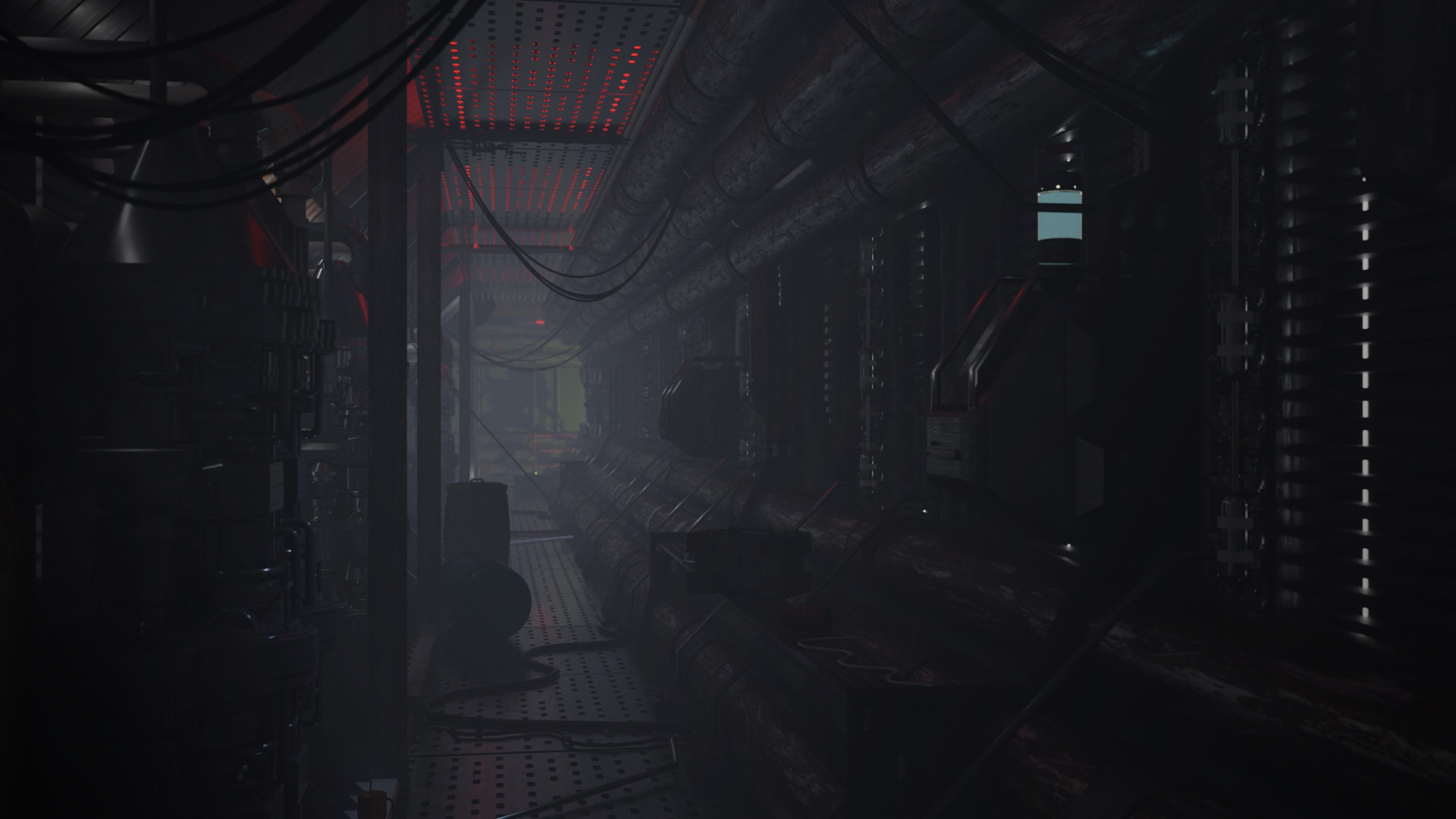
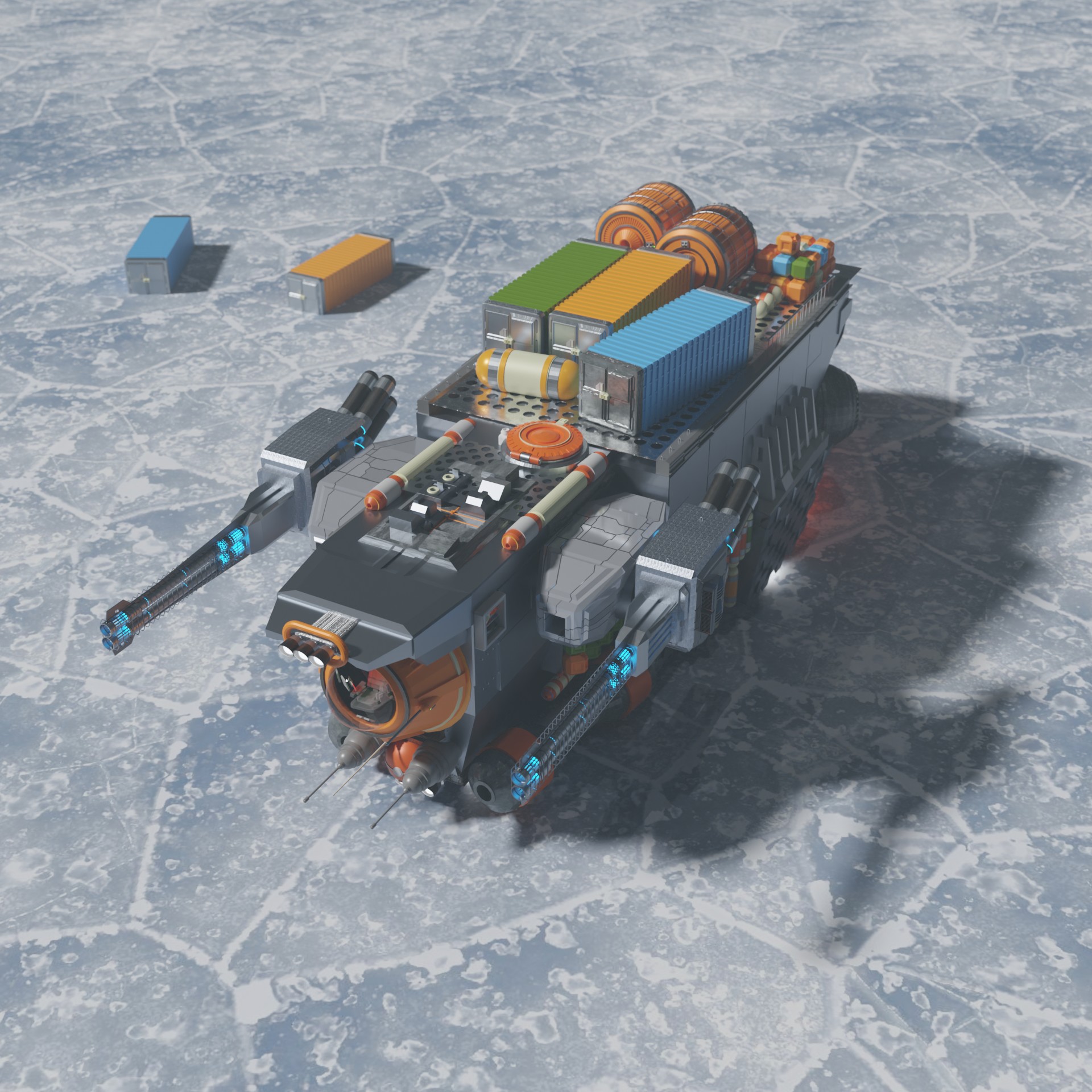
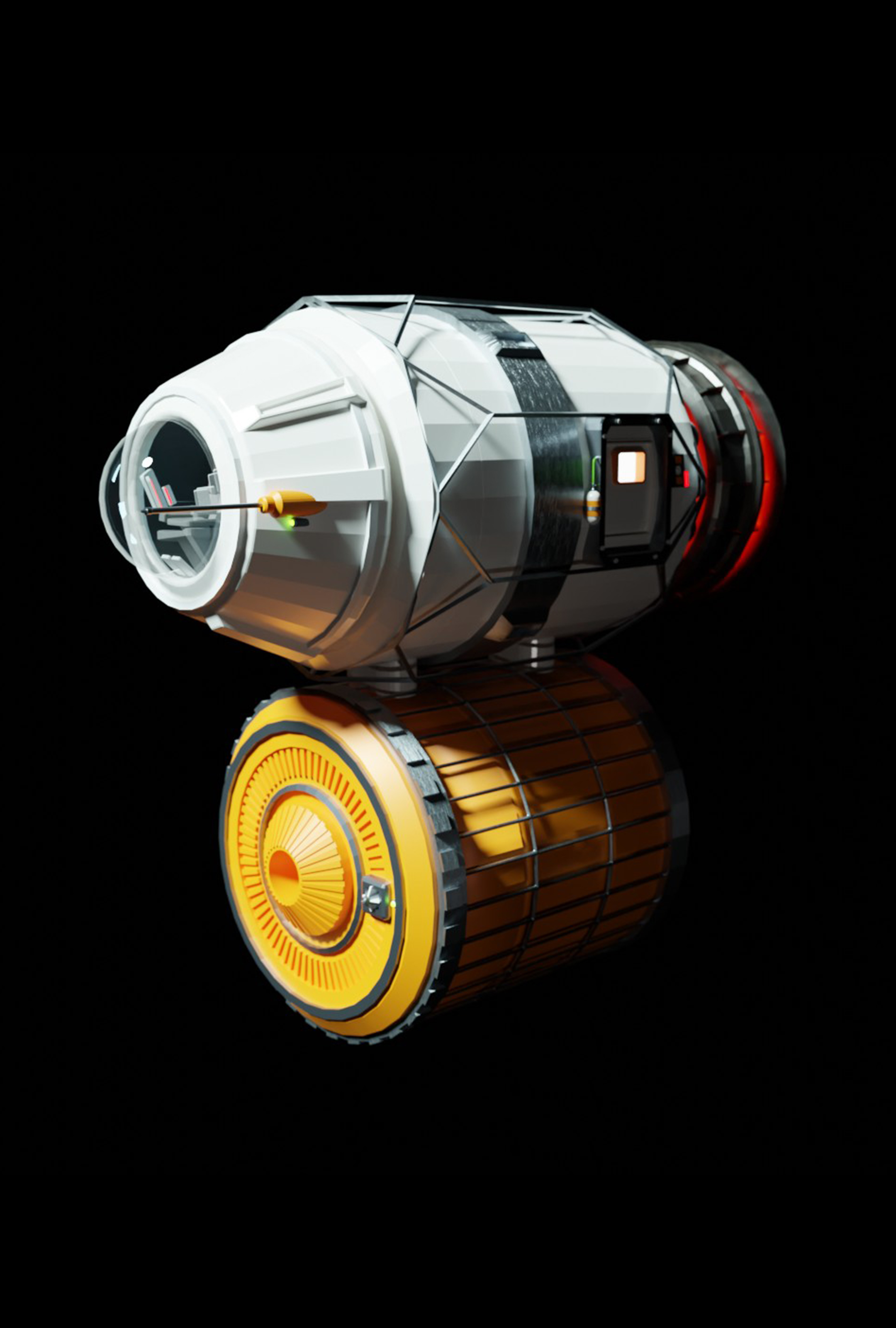
The course covered the basics so well I was able to go away and start building my own models straight away. I’m not on commission by the way, but I really do recommend that course. So what have I built in the last few months since I started learning Blender?
I’m amazed at how quickly I’ve picked things up, and that’s absolutely testament to how good that course is, and how powerful Blender is, but I still have a LOT to learn.
Next on the list are more spaceships and perhaps a scene from Bladerunner or Star Trek.
Hopefully I’ll be back soon with more multidimensional goodies.
As ever, it’s been a while. I have been pretty busy with a few jobs though, so I hope you’ll forgive me.
A couple of long term projects are just coming to a close, giving me a bit of breathing space – very welcome, but also leaving a big gap in terms of income – not so welcome. Definitely time to cast my eyes around for some more work.
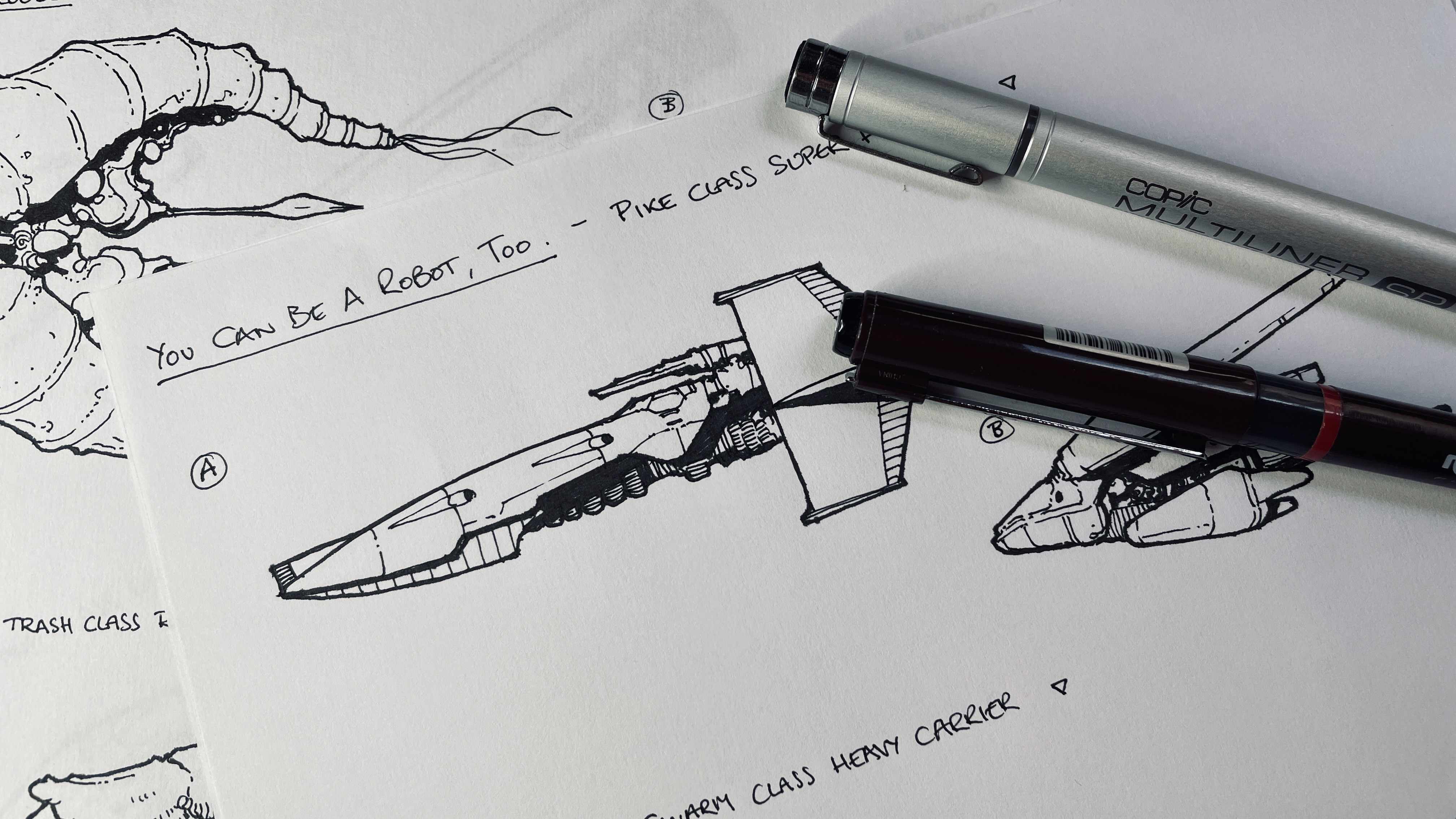
Much of my work in the last year or so has been in the TTRPG (Table Top Role Playing Game) space, either on games themselves, or on some associated illustrated bits and pieces. There’s a big game coming out this year, called Zeo Genesis – which is a Warhammer 40k style game, set in the far future. I worked on a range of stuff for the game, from concept art for spaceships, to scenery designs, and even some work on the logo and design of the rulebook. The other big project, was An Infinity of Ships, which is a ‘system agnostic’ toolkit for sci-fi rpgs. It can be used by GMs, players, or game designers, to help flesh out their world building and to give some weird flavour to their games – particularly with regard to spaceships. Here are a few of the 80+ images I created for An Infinity of Ships.
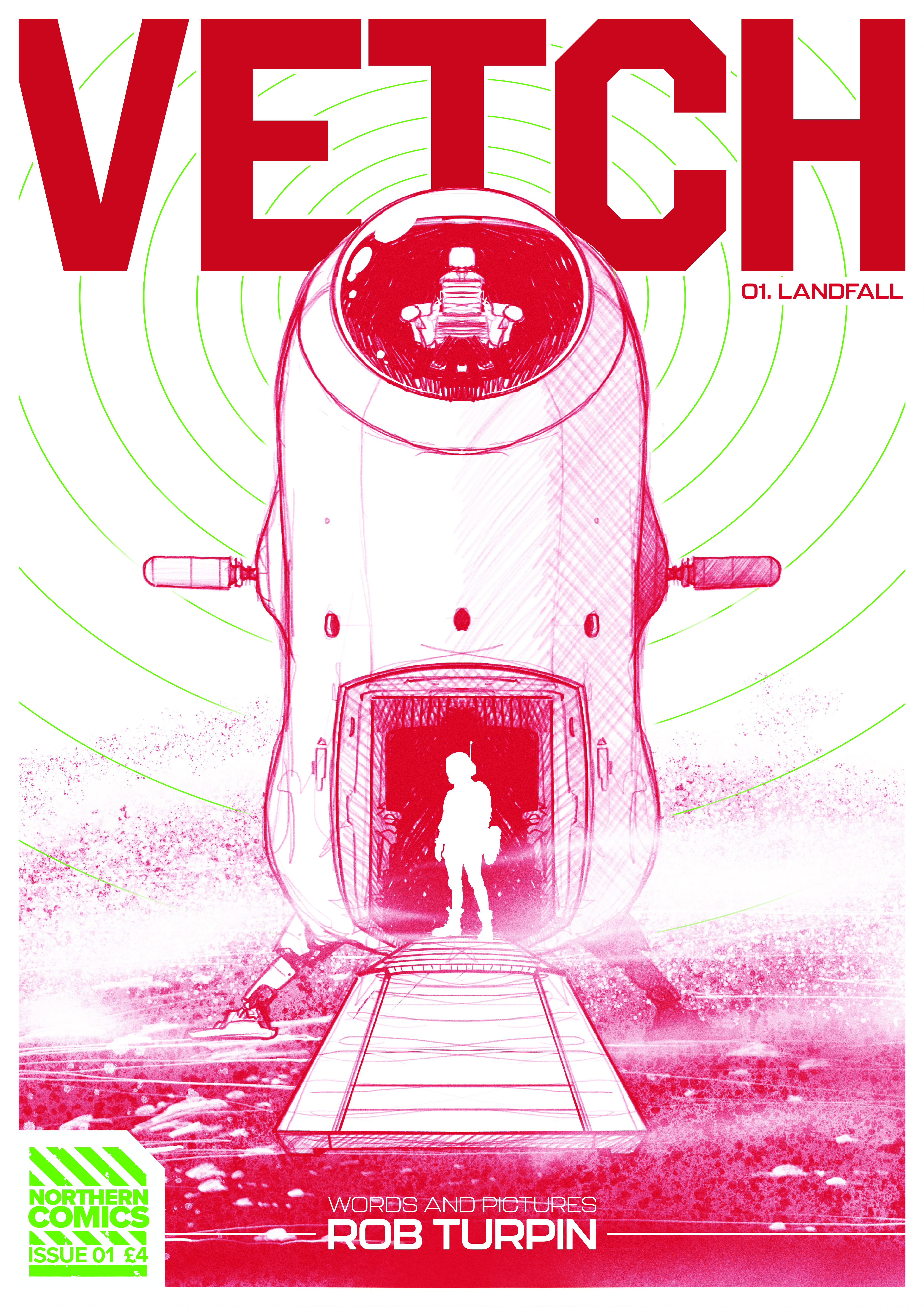
I’ve also recently been playing around with some ideas for a comic – not that I’ve actually written one. I did a sketch (below), and someone suggested it looked a little like a comic cover, so I made it in to one.
I really liked how this looked, so I decided to create a few more. There’s no real story for the comics yet, just this short outline I posted to Twitter…
One more job they said. One more job, then I can retire. Retiring at thirty isn’t unheard of, but it’s unusual enough to get me some curious looks back at The Mission. Not everyone’s been thirty as long as I have though. I’ve earned a rest.
Maybe, just maybe, something will come of this idea. Perhaps. And if not, it’s a fun little project just making covers.
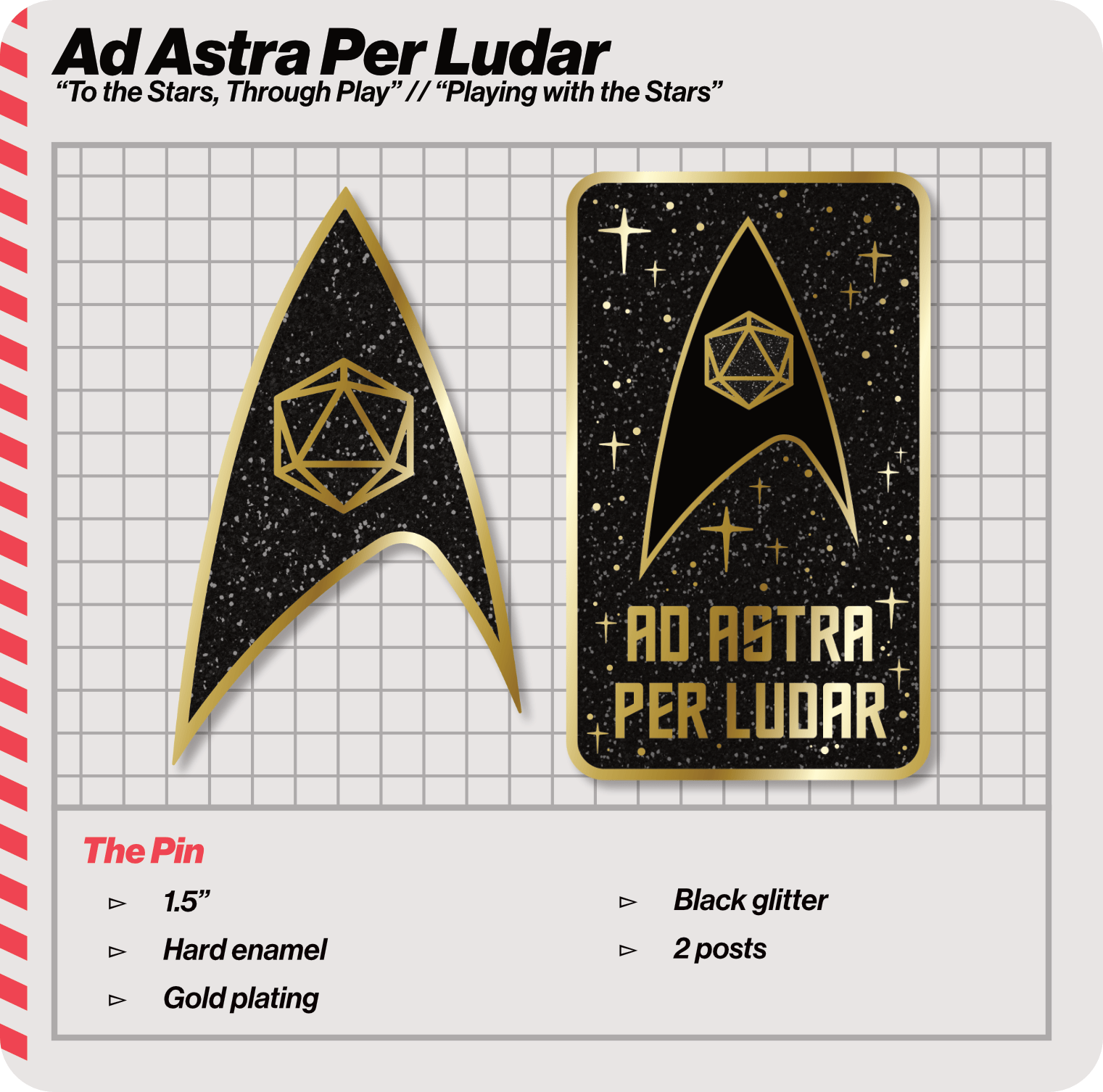
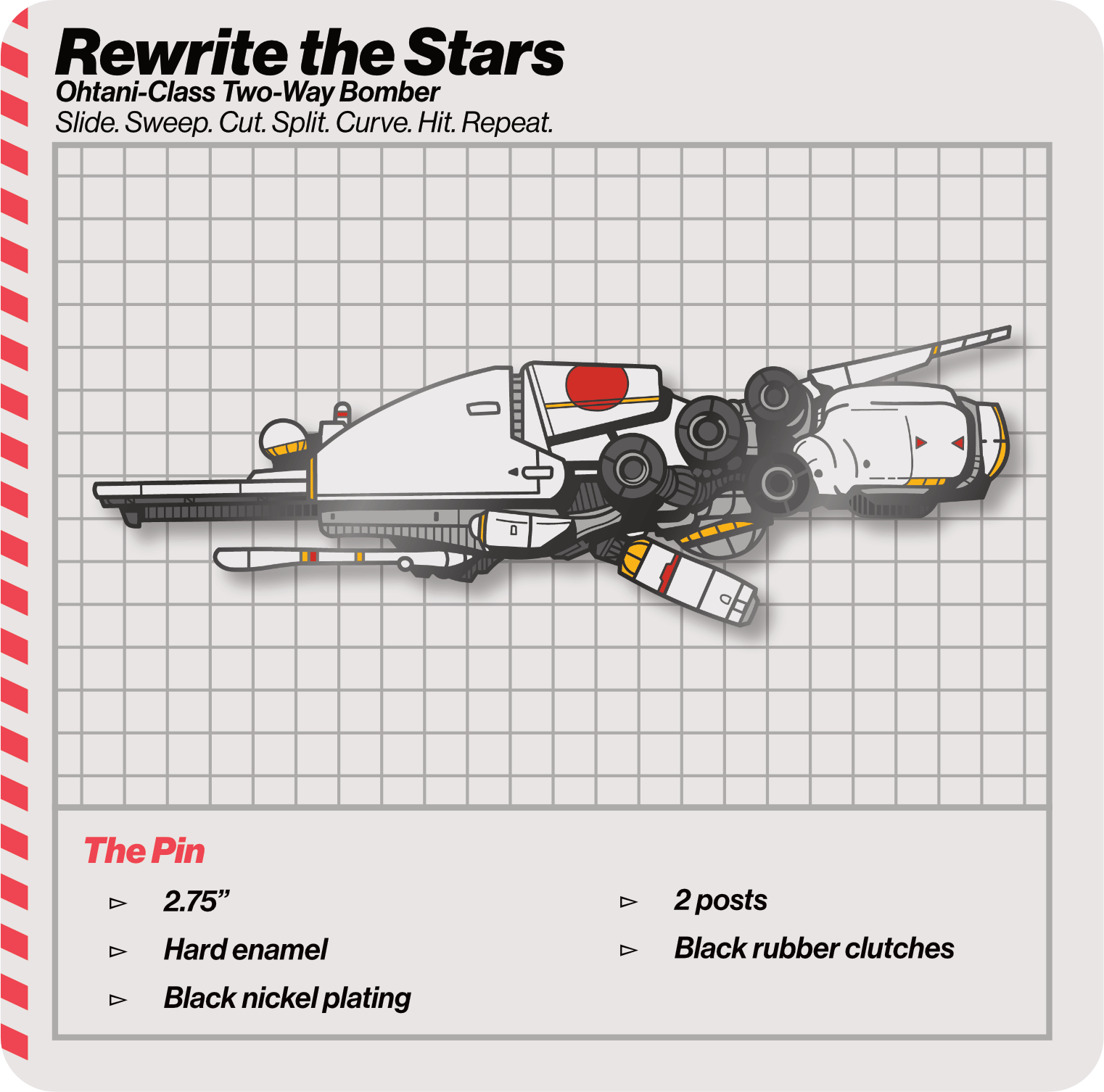
The next thing on my schedule, is promoting a little offshoot of the Infinity of Ships project, called An Infinity of Pins. It’s a project which is part of ‘Pintopia‘, from Backerkit. 20 creators producing enamel pin badges, and there’s a cross-promotional and collaborative aspect to it. There are a bunch of spaceship pin badges, based on my illustrations, that you can pick up. I’m really looking forward to getting my mitts on some of these myself.
So while I’m looking for work, and promoting these projects, feel free to have a browse and sign-up and back them if they’re your thing. Meanwhile, I might just be writing a space horror rpg of my own.
Thanks for reading, and I’ll see you soon (not literally, that would be spooky).
I finally have a new outlet for prints. It’s been over half a year since Ellipress closed down as an artists’ print store (mainly due to Brexit tanking sales from Europe), and I’ve finally replaced it.
I now sell prints over at INPRNT. I’ve heard great things about the quality of the products there, and lots of artists I admire have their print stores with INPRNT. I only have a handful of prints available right now, but I’ll be adding more every week for the next couple of months.
Currently I have the following prints available (which can be bought in a variety of sizes)…
If there’s any of my work you’d like to see available as a print, or as another type of product, do let me know. There are also options on INPRNT for things like cards, phone cases, stickers etc.
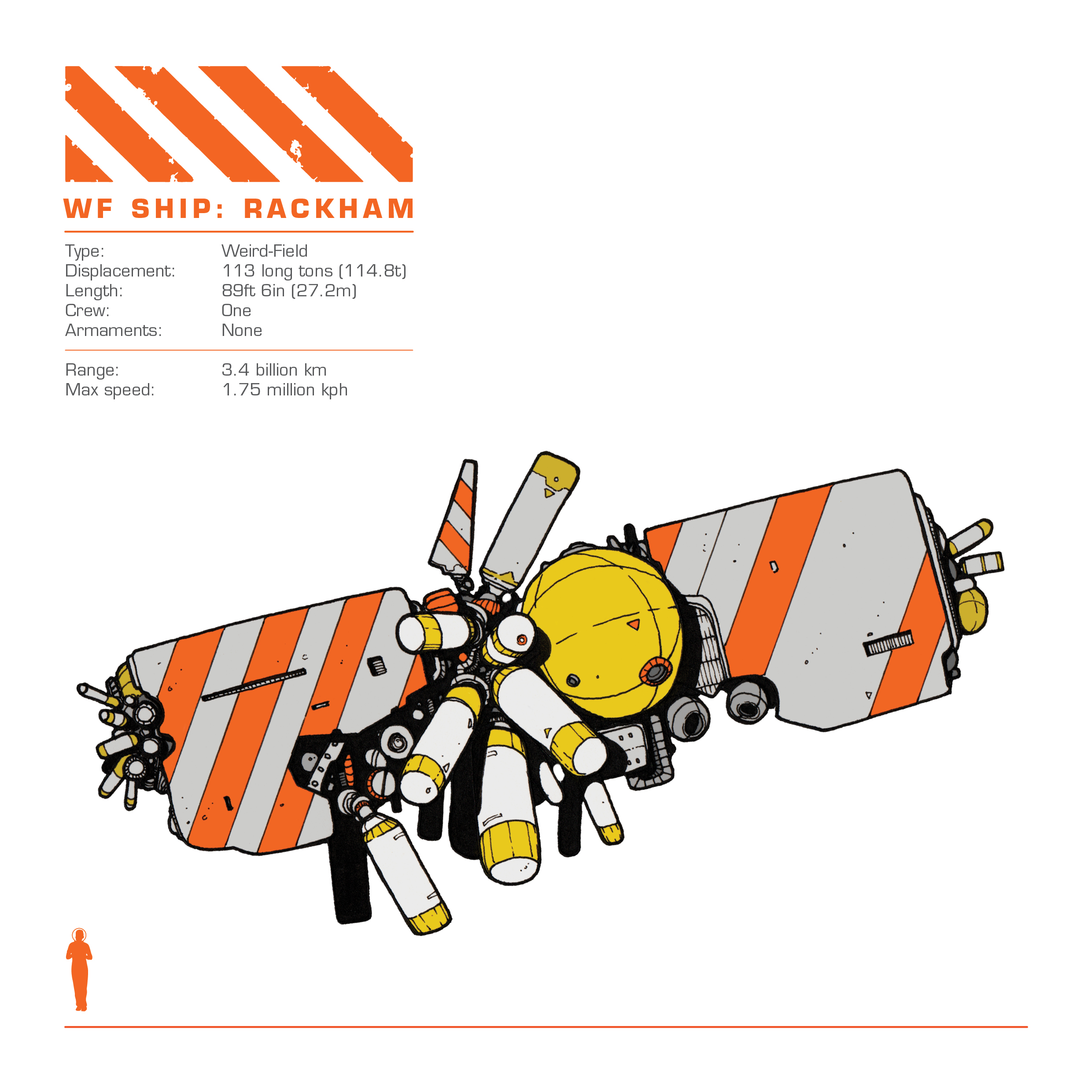
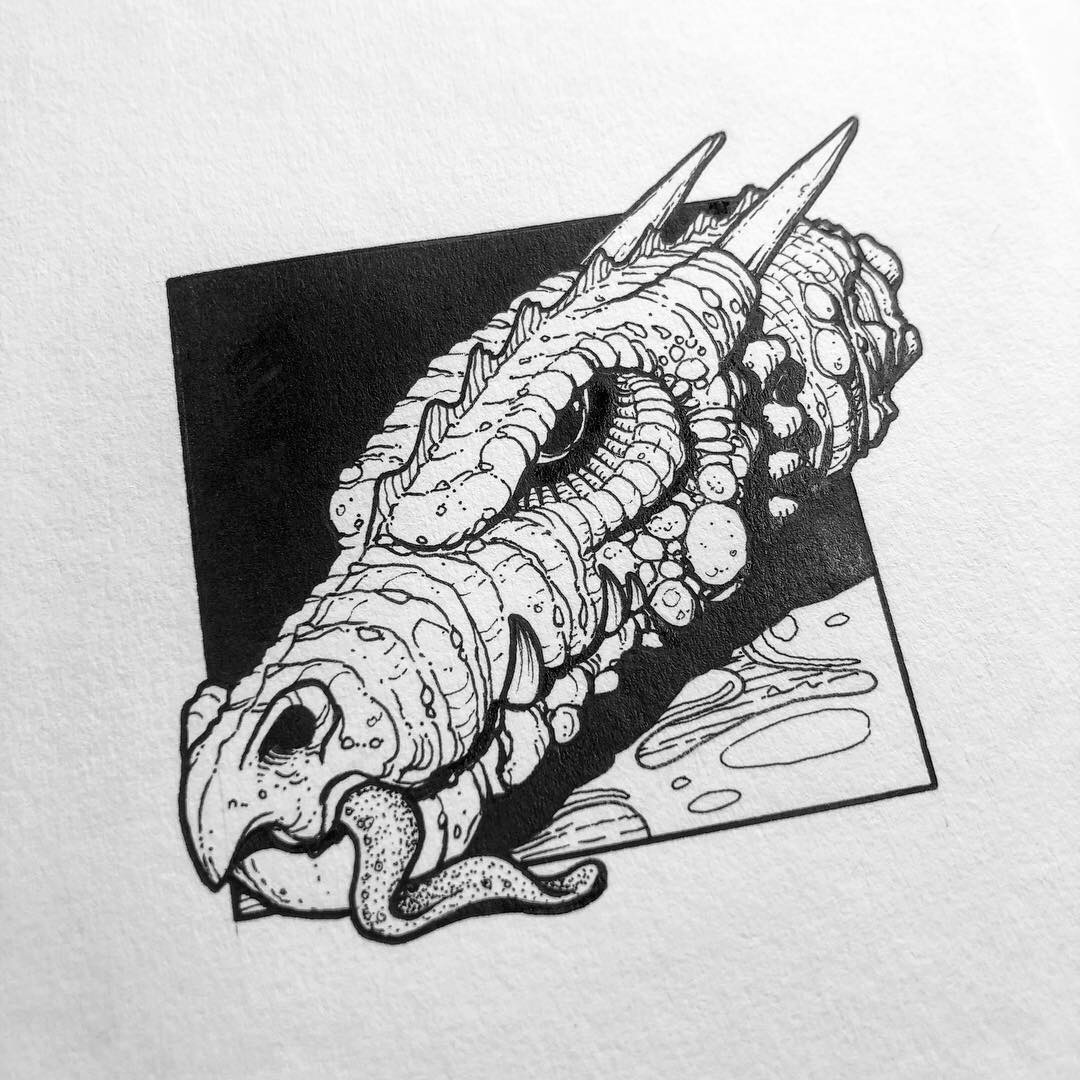
The Rackham.The Black HenThe Knucker Hole DragonThe Alp LuachraInitial sketchbook doodles.The Water House.Mining Droid II.Creature Under The Rock.Day 29 of Inktober. 4112 likes on Instagram.Day 28.Hillside Cityscape II.Sketched out and the inking started.Finished.Spaceships.
I’m now happily accepting a new round of illustration commissions for 2023. If you’ve ever wanted to own some original art – and you like my work – now’s your chance.
Commissions
If you would like to buy an original drawing, email me at rob [at] thisnorthernboy [dot] co [dot] uk , and let me know what kind of thing you are looking for. While you can ask me to draw absolutely anything, it’s probably best to stick to subjects and themes that you’ve seen me produce already. I’m not saying I’d never draw a portrait of your cats, for instance, but it’s unlikely. Some subjects I love to draw are:
Ships and Lighthouses Isometric buildings Robots Astronauts Spaceships Imaginary places
What you’ll receive will be a black and white pen drawing, on good quality, 220gsm cartridge paper. If you would prefer a colour illustration – let me know and we can have a chat.
You can also request for the illustration to be landscape or portrait in orientation.
I can’t guarantee that every request will be something I’d be happy to draw – but I’ll do my best. If you take a look at previous posts on this blog, or on my Instagram page you can see the kinds of thinks I like to illustrate..
What will this cost?
For an A5 (148 x 210mm) commission I charge £95 + post & packaging. For an A4 (210 x 297mm) commission I charge £175 + post & packaging. For an A3 (297 x 420mm) commission I charge £275 + post & packaging. For an A2 (420 x 594mm) commission I charge £475 + post & packaging.
When you email me to request a commission, if you can include the address you’d like it shipped to, I’ll work out the cost of postage and let you know. If you’re happy with the overall cost I accept payment by PayPal or Bank Transfer.
When will you get your drawing?
I aim to complete and post all illustrations within six weeks of receiving payment.
PLEASE NOTE: This post is regarding private, personal commissions. If you want to discuss a commercial proposition – illustrations for a book, game, or anything else that you would be selling, then please get in touch directly.
This is the fourth guest post on this blog, and it’s the most unexpected. Previous guest posts have generally been about the quest author’s work – art, process, methods etc. That’s what I was expecting when I asked Alex to write me something. In an unnecessary show of modesty, Alex decided to not write about himself or his work, but of something much deeper. It’s very good. And you should definitely read his post below, but first, as Alex is too modest, I’ll sing his praises here.
Alex Connolly is an Australian designer and illustrator, living in southern Japan. He’s worked for Neill Blomkamp (director of District 9, Elysium and Chappie), Marvel (I don’t need to add anything here do I?) and Double Damage Games. I first saw his personal work and was blown away. Alex produces incredibly technical mechanical sci fi illustrations. Incredibly designed, but perfectly believable. Check out Alex’s work on his website and twitter.
And now, for Alex…
•
Ember in the Palm
First of all, I want to thank Rob for the opportunity to write for his esteemed blog.
Our creative agency, while not exclusive to, would be a lot different if it weren’t for the strange and dexterous marvels known as the human hand. No sooner free from the constraints of quadrupedalism, our ancient forebears took to all manner of evolutionary endeavours. Fast forward beyond the adaptive wonders of our Homo habilis ‘Handy Man’ origins, and we arrive not just at the mechanical deftness of our closer relatives, but breakthroughs in creative cognition.
In three parts, I want to select particular moments in the history of visual communication that celebrate the hand as a creative constant through time. These are not necessarily definitive, more personal picks from a smorgasbord of creative pursuits as we tumble through time.
The first part deals in the very definition of a touchstone.
Turning Point I – Wonderwall
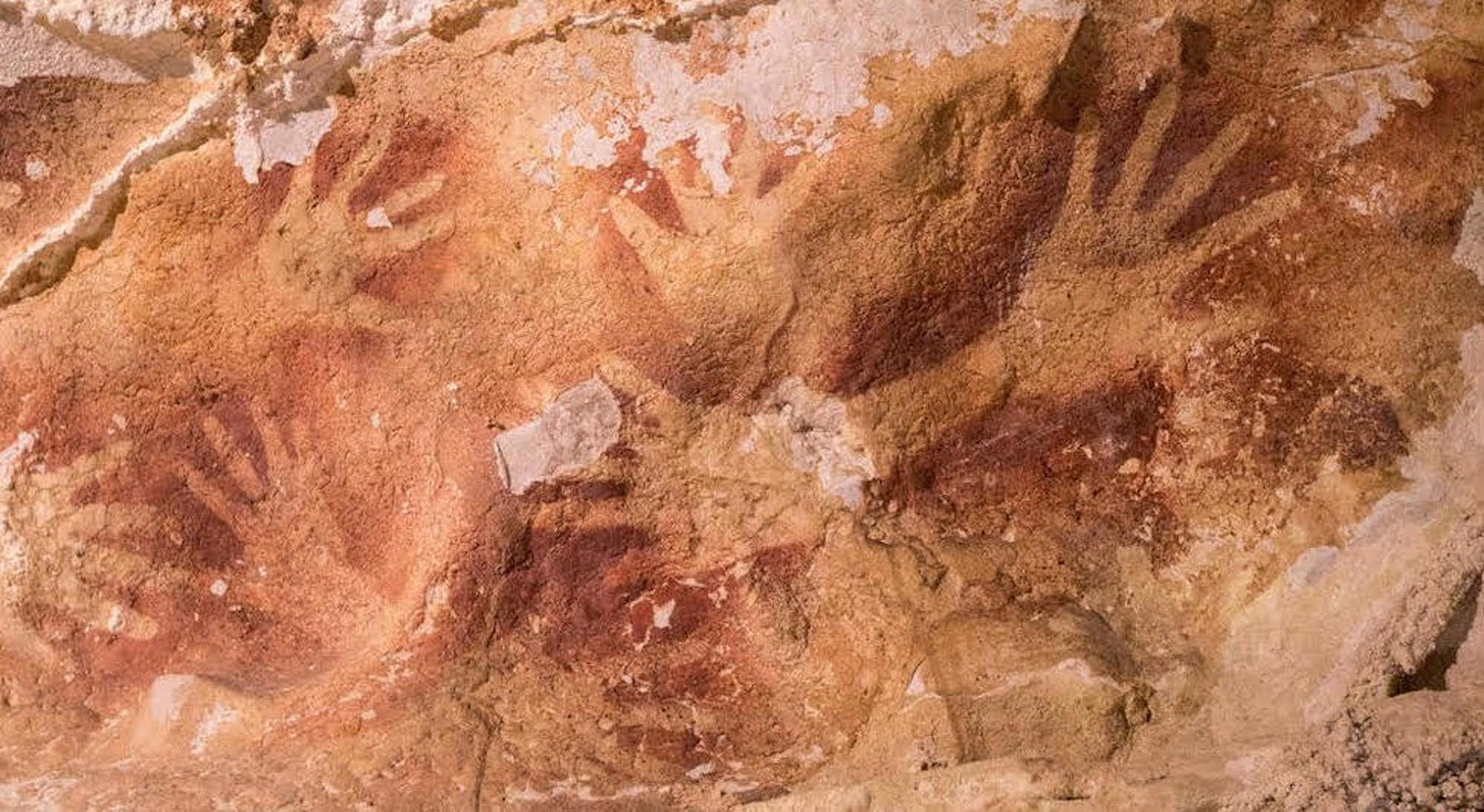
Parietal art or ‘rock art’ can be traced almost 40,000 years into prehistory. It is a strong visual demarcation that helps to define our ancestors as not just reactive wanderers, but as possessing an intrinsic creative drive to reflect and record. Naturally, given our physiology and biological perspective, it stands to reason hands feature as some of the oldest rock art in existence. These are our most practical tools; our dexterous and articulated arguably as important as the brains that operate them.
As such, the oldest rock art currently recorded are hand prints. Two particular locations featuring these antediluvian artworks are the El Castillo cave paintings in Spain and on the Indonesian island of Sulawesi, dated to 39,000 BCE and 37,900 BCE respectively. There has been some speculation as to which species of early human was first to be artistically inclined for its own sake. Conjecture has yet to prove whether Neanderthals committed to stone art in the same way as Homo sapiens, but it is understood that the latter were responsible for both El Castillo and the Liang Timpuseng artworks.
Both locations were used by early humans as shelters for generations, featuring an array of figurative and symbolic artwork across hundreds, perhaps even thousands of years. Hand art, a form dominated by negative space, has the artist — a shaman or perhaps a leader — place their palm against the rock face and spray ochre or some other form of intentionally-selected stain via their mouth or through a hollowed bone or reed. Theories as to meaning suggest anything from ritual to merely an act of self-actualisation, from ownership to leadership.
In the end, all share intent. Marking a moment in time in communal space, iconography that is not merely acknowledged by the artist’s contemporaries, but by generations thereafter. Ancestors such as Australopithecus garhi and Homo habilis are often associated by their primitive tool creation and usage, but said usage was largely survival-oriented. In the case of parietal art, it speaks to complex preparation such as the gathering and production of medium, and the conscious capacity to undertake an act that does not directly translate to survival.
Often perceived as the bare minimum of creative expression, the synaptic leap that could afford such action remains profound. Considering we are the recipients of this moment in time, it elicits what German philosopher Rudolf Otto called the numinous; an arousal of spiritual emotion or an overwhelming sense of awe.
While cave art soon came to showcase cognitive development of the visual cortex, in the ability to render wildlife or spiritual conceits, the state of modern visual communication arguably started with the outline of a hand.
In the next section, I want to share development of another aspect of visual communication; one that took the hand itself as a canvas, creating an ancient artform that crossed cultures and class.
Turning Point II – Shrubs in the Desert
Before hands were pressed to walls in ancient grottos, Neanderthal tribes inhabiting the Iberian Peninsula were known to practice the art of self-beautification, a breakthrough in symbolic-thinking that predated the arrival of Homo sapiens in Europe by 10,000 years.
This concurrent development in consciousness is evidenced by the discovery of discarded shells containing trace elements of foreign pigments. In essence, crude palettes within which to mix lepidocrocite, haematite, pyrite, and charcoal for the purpose of crafting body paints. Studies suggest that a driving factor for this paradigm was social pressure, as Neanderthal tribes began to condense in lower Europe, and eventually amplified by the arrival of Homo sapiens. Therefore, survival required an intensification of visual impact. This was, in essence, a primeval social mantle atop a Darwinian core, as groups encountered each other and vied for best first impression. It can be argued that little has changed.
Make-up has been a staple of self-expression ever since Humankind’s cousin started mixing hues, expressed throughout history as a signifier of wealth and importance. Egyptian pharaohs associated beauty with spirituality, leading to a ritualisation of cosmetics. Certain minerals such as Malachite and Galena gave the distinctive aqua-green and black tones of Ancient Egyptian eyeliner, with the production thereof being prohibitive and exclusionary.
Such exclusion has meant that visual communication and its development was often the providence of aristocracy. Monied strands of society who, by merit of position and patronage, inferred artistic appreciation as an upper class pursuit. But not all visual art is beyond the means of the underclass, and in the case of henna, can appeal to and be practiced by all levels of society.
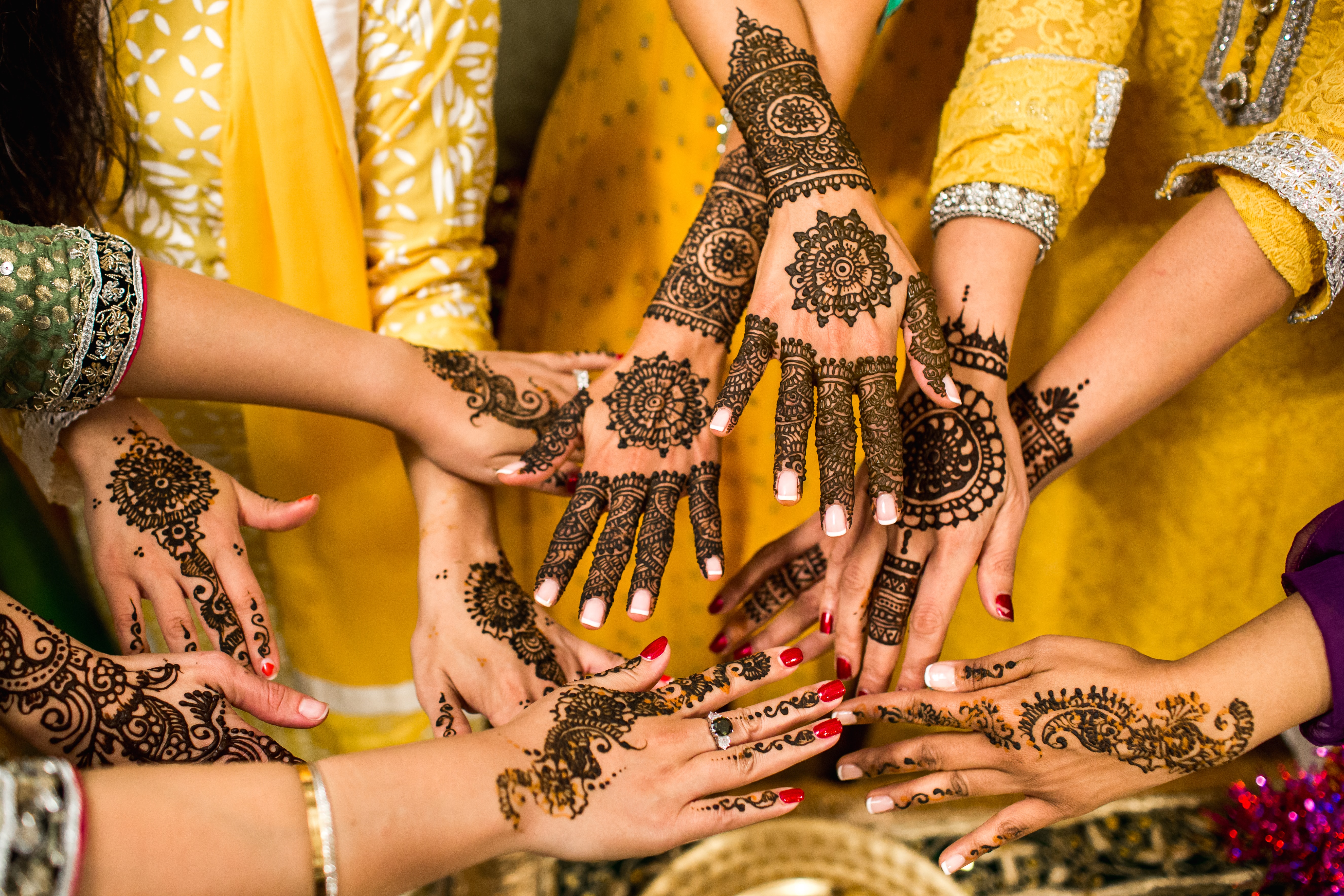
Made from the rugged Lawsonia inermis that flourishes in arid climates, Henna has been used in beautification since the Bronze Age. A powder is ground from the leaves of this resilient plant, then mixed with liquid such as lime juice or tea. After resting, it is applied to the hands, feet or hair, where the now-freed Lawsone molecule binds with keratin, leaving behind a robust, rusty red that lasts for weeks.
The plant’s abundance, and relative ease of preparation, meant that time was the only prerequisite to usage.
Henna usage has been recorded from North Africa, throughout the Middle East, to the Sub-Continent and as far as the Malay Peninsula. As impressive as geographical spread is the cosmetic’s sheer universality in the societies who used it. The Hery Sesheta embalmers used henna to decorate nails prior to mummification in Ancient Egypt, and Cleopatra herself used it both in body decoration and in hair dyes. The North African Tuareg and Amazigh tribes took to using henna to adorn their hands with the same ornate patterns they wove into their Ehan tents. Practitioners of all regional faiths found henna an excellent way to bypass texts that forbade permanent tattooing, or frowned upon adornments such as jewelry that could conceivably convey idolatry.
It was brought into Persia through the Rashidun Caliphate’s westward conquest beginning in 633 AD, and while indigenous usage on the Sub-Continent was speculated to have started earlier, the later Mughal invasion of India in the 16th Century cemented it as a social norm. Contrary to association, the country was one of the last places to take up this art form.
Henna design variation naturally between region and culture. From Mali’s fish bone style to the aforementioned angular geometry of the Algerian nomads, from the ‘dipped fingertips’ of the Hebrews and Copts to patterns produced by string guidelines across Persia; each hand possessed intricate and highly meaningful adornment, reflecting the culture within which the owner existed.
More importantly, this was across the entire socio-economic spectrum. From the poorest castes to the richest nobles, henna was a cultural constant. Mummified remains of peasantry in Ancient Egypt, their rudimentary interment a far cry from the careful preservation of deceased nobility, still exhibited henna pigment on their scarified remains.
Requiring a level of symbolic interpretation, and aside from practical creations like weaving, henna’s prevalence is visual communication that existed against prohibitive conditions like literacy and status. This highly personal beautification of one’s own hands remains unlike most artistic pursuits in the ancient and medieval worlds at that time.
In the next and final post, I want to present a critical moment, where the physical and the virtual collide to leave an indelible mark on creative culture.
Turning Point III – Futureworld
It was seen as a dancing band of light displayed on the curved display of a cathode-ray tube, signal voltages rendered in visual form. Ben Laposky’s oscilloscope arrived in 1950, offering the first rudimentary glimpse at a simulated visual future, even if a byproduct of test machinery.
Twenty-two years later, in a graduate program at the University of Utah, Fred Parke and Edwin Catmull carried what Laposky had started to then-unimagined levels. All it took to leave an indelible mark on visual communication was an industrial-grade research computer and Catmull’s left hand.
At the time, Catmull was undertaking a research task not in the field of art, but science. It specifically related to the difficulty of rendering and animating curved surfaces on the hardware of the day. This processor-intensive computation favoured simple geometric patterns where vector coordinates could be rendered in relation to each other with comparative ease. As a technical challenge, the human hand was selected to map, compute and animate, as it required the problem of simultaneous movement to be solved. Moreover, rendered not just as rudimentary vectors, but via a technique called texture mapping to give definition and dimension to the model.
The two made a plaster cast of Catmull’s hand, then set about charting the contures of the model into a series of triangles. Three hundred and fifty interlocking triangles were then measured in relationship to each other using a computerised drafting tool that logged coordinates in three-dimensions, which in turn slowly replicated the cast within a custom CAD program Catmull had coded.
Once all the information was transferred to the computer, so began a case of manipulating vertices in a simulated three-dimensional space, and ensuring that neighbouring sections acted accordingly to realistically portray articulation. Texture-wrapping was then applied over the wireframe, which accounted for light sources and calculated shadowing. It was a new form of sculpture, a simulacrum of the organic in an electronic landscape. And while the painstaking minute-long animation occurred clumsily frame by frame via off-screen photography, this digital hand was a crucial jumping-off point for computer graphics and animation.
The ramifications for rendering figurative complexity within a synthetic space would cause ripples beyond calculating and testing engineering theories; one minute’s worth of hand-waving would set the imaginations of artists on fire. Without it, genre-defining authors like William Gibson may not have conjured their ideas about virtual reality in quite the same way, if at all. CG may not have come of age in cinema quite so quickly, had Catmull and Parke been satisfied with the crude cylinders and quadrilaterals of the era. This was a watershed moment, in every one of its three-hundred and fifty interconnected pieces.
From the spattered negative space on rock walls to the philosophies behind Univers, visual communication has been a constant but ever-evolving way for humankind to relay their ideas through shape and colour. Environmental and extraneous contact points throughout history supercharged our capacity to render, reflect and record our ideations of the world, with an intent to instill or share them with others.
Cognitive development in the visual cortex, alongside increasing social elements, suggested that early humans put as much intent into parietal art as the Henna artists of the ancient and medieval worlds. Henna art itself a broad concept that traveled the trade routes, or found contemporaneous usage on account of the plant’s ubiquity. By the time the artform had arrived in the Indian subcontinent, it had spread far and wide, and was used to convey its own myriad stories.
And while it started as a painfully rudimentary process, the mitochondria of Parke and Catmull’s painstaking work exists within each and every 3D project; from Hollywood effects to a kid teaching themselves Blender.
That inherent creative drive, however it bears out, is something to be treasured and cherished. Particularly as visual artists, where the uncanny and ineffable conversation between brain and hand presents itself as an artistic communication, Otto’s numinous is never far away.
Even when the blank page is a burden, or our creative batteries feel flat, therein remains the powerful original spark, one that was pressed against a rockface at the dawn of time.
•
Huge thanks to Alex for this fascinating and unexpected guest post. That last sentence will stay with me for a long time. Once again, do have a look at Alex’s website and follow him on Twitter.
Hi all, just a quick update to say I haven’t forgotten about my blog, or those who read it. It’s been a bit of a crazy year, and time for writing, and the headspace I sometimes need to do so, has been in short supply.
I am intending to get back to writing more regularly, and hopefully I can kick that off in a few weeks time.
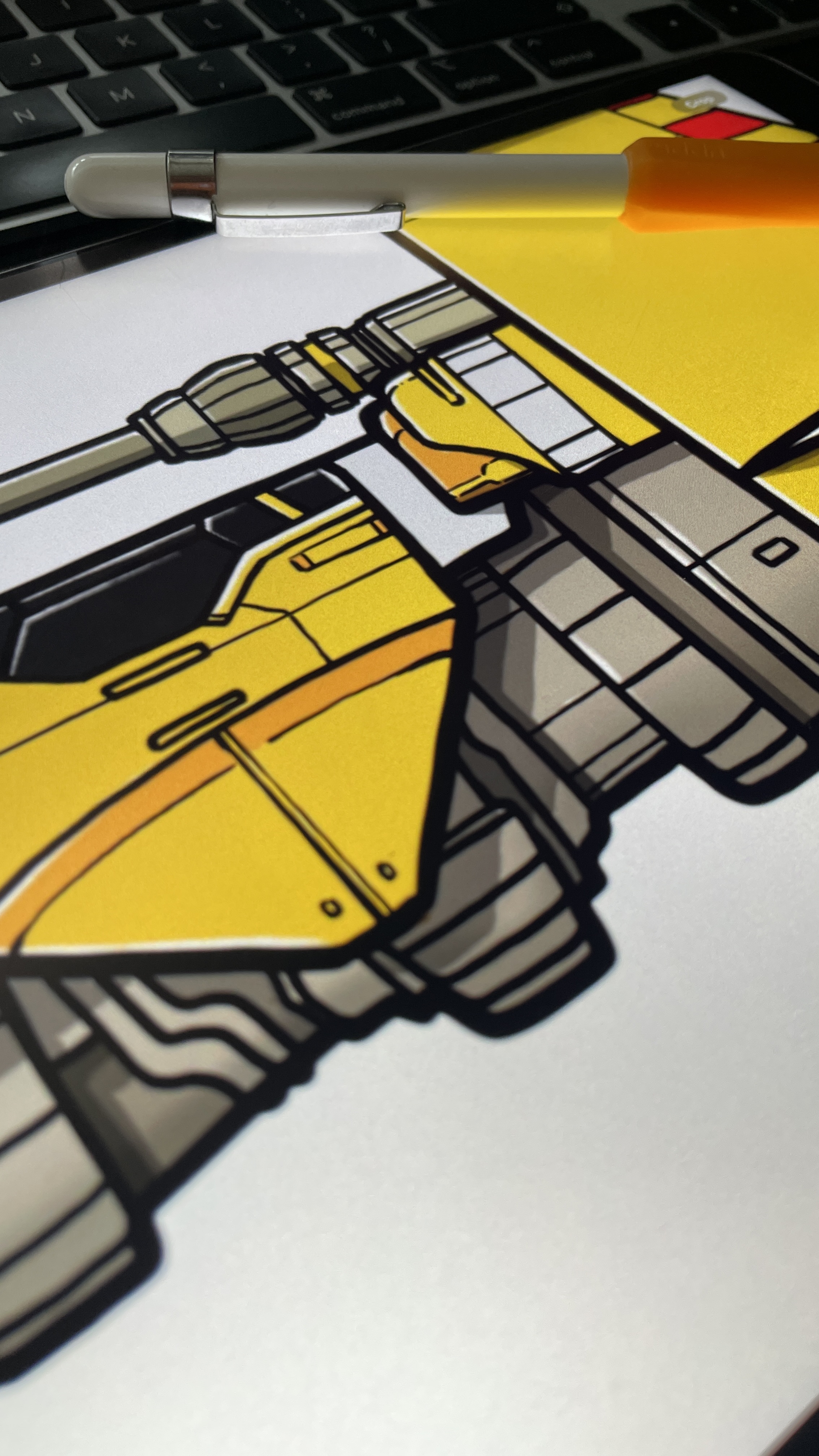
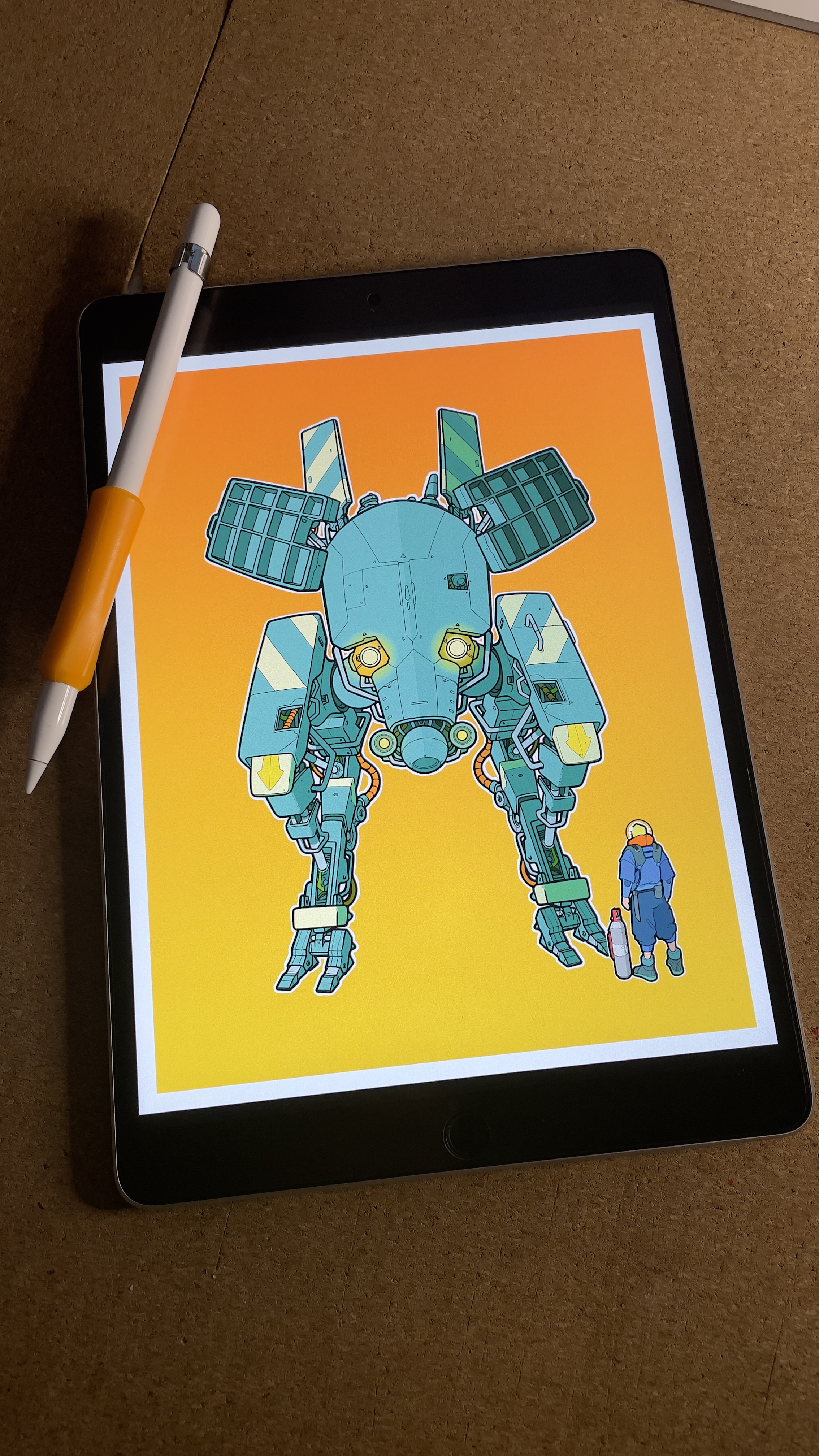
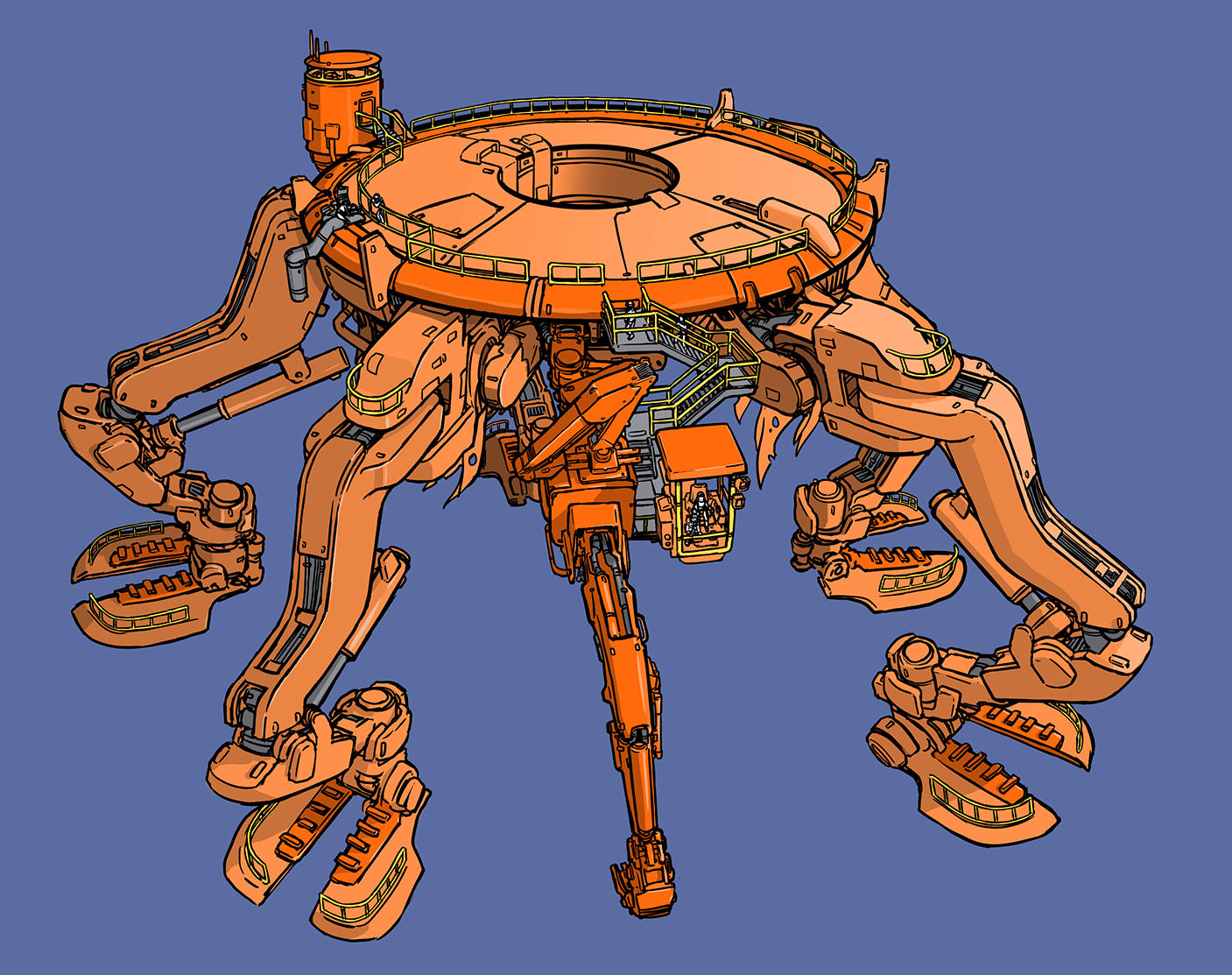
Until then, here’s a recent mecha illustration for you. Drawn on the iPad, in Procreate. I’m working digitally quite a lot at the moment. Commercial work – I’m doing some concept art for games – means fast turn arounds and frequent iterations and amends, so digital works well.
Quite a bit probably as it’s been a while since I’ve blogged.
I’m just over a, thankfully mild, bout of Covid. Omicron finally caught up with me after two years of dodging it. It does seem like this latest variant is getting just about everyone this time. Stay safe and well everyone. Get jabbed, wear a mask.
Work-wise – I’ve been doing some concept art for a sci-fi video game which has been a nice change of pace. Producing lots of variations of spaceships, refining and finessing them. Lots of fun. I also did some illustration work for another video game, this time a fantasy/gothic themed one. Again great to do something a little different. I think I learnt quite a bit working on both of these, and as there’s likely to be much more work from both, plenty of opportunities to level up.
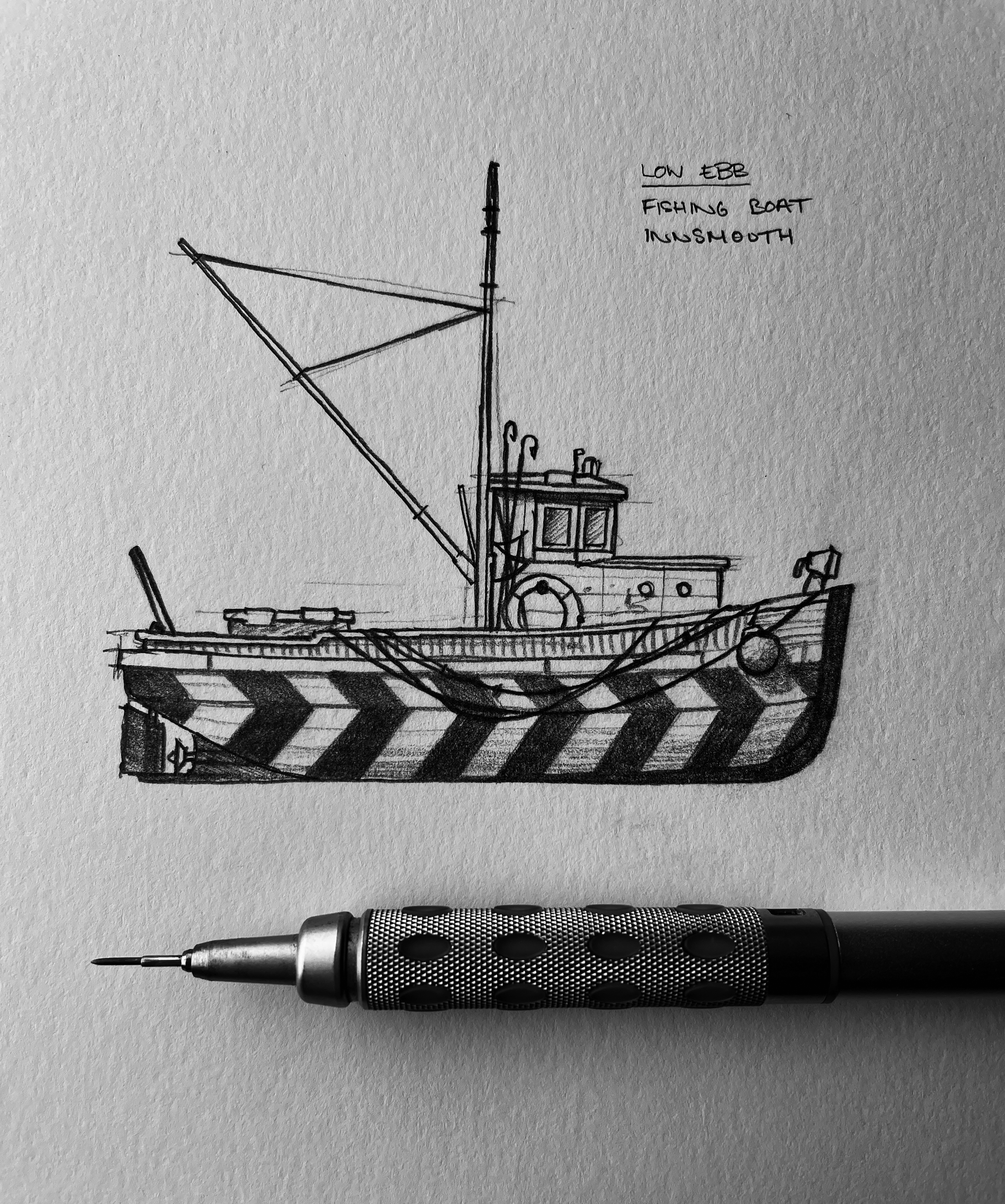
Personal work – I’ve continued working on both my Innsmouth and Weird Field World projects. Adding illustrations and background writing and fiction and fleshing out the worlds. I still have plans to produce a book of the first chapter of Innsmouth. And of course, book two of the Weird Field World – titled (somewhat unsurprisingly as) Weird Field War is in the works.
Raptor 01 – a new enamel pin badge, based on a design from my Deep Space Fleet II poster. You can buy the badge here. There are plans to launch a Kickstarter at some point to produce a whole fleet of enamel spaceship badges.
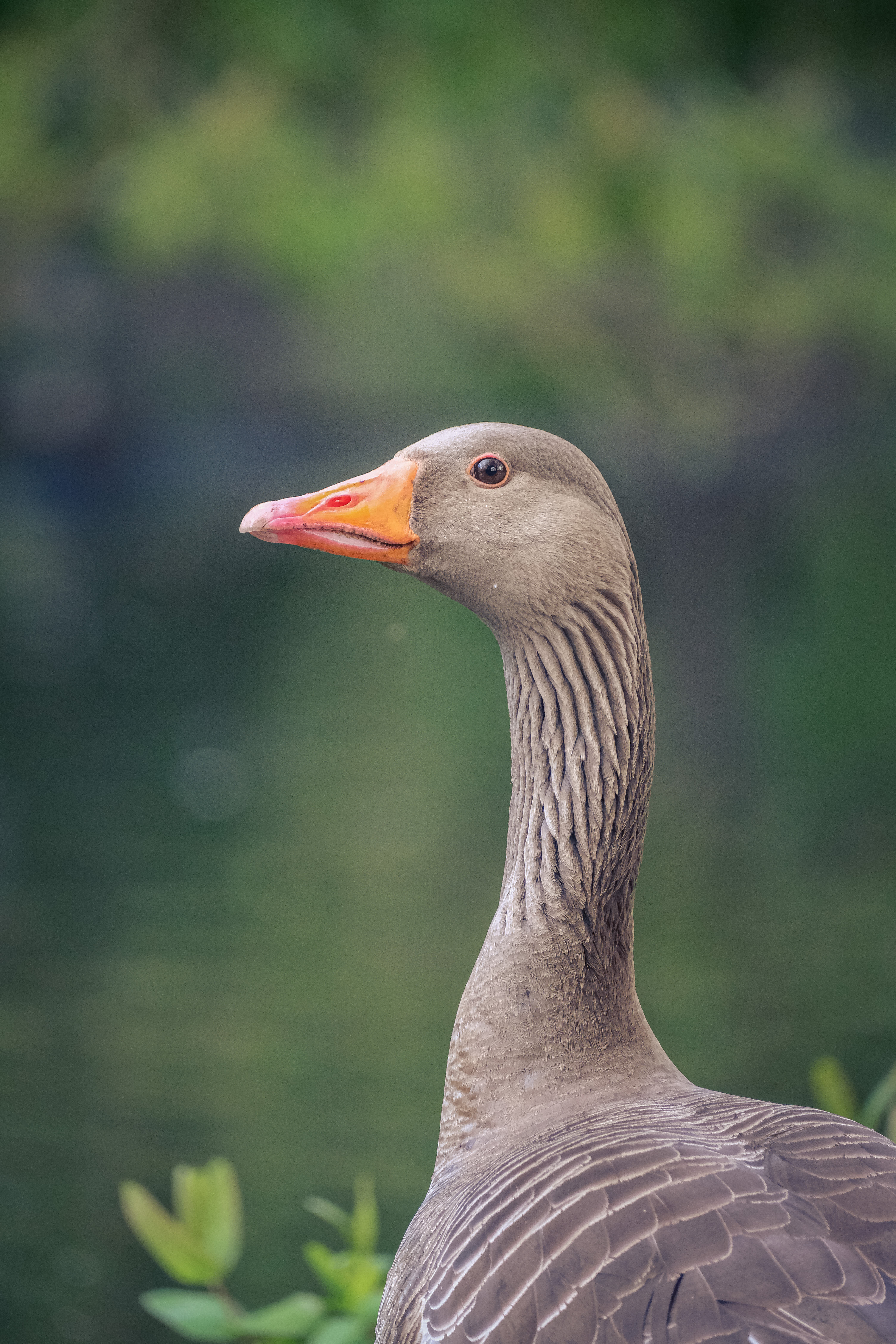
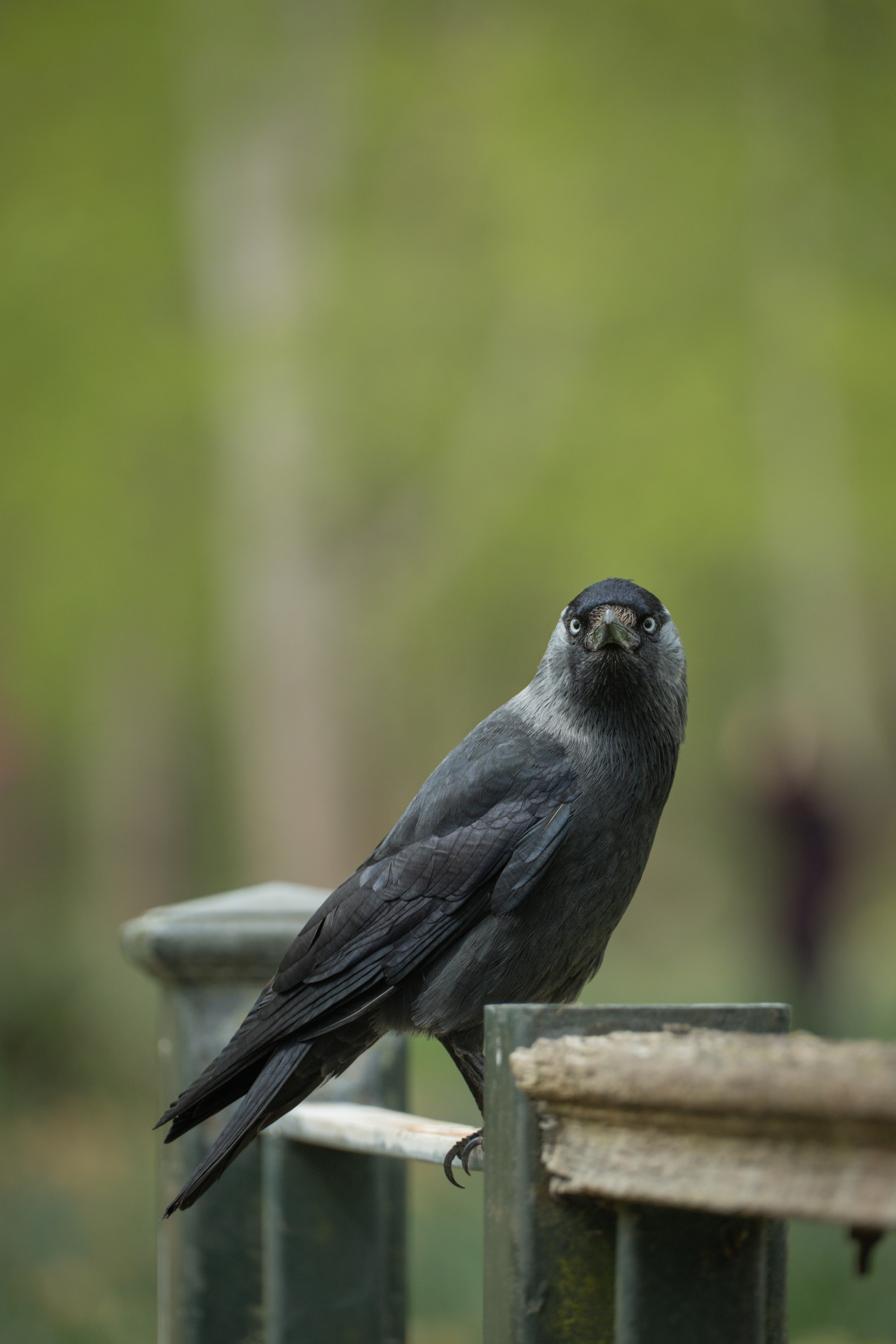
I’m still out and about as often as I can taking photographs. I’ve had a slightly dodgy achilles for a while now, so I’ve had to take things a little easy. One of my favourite recent photos, taken at the London Wetland Centre.
Iceland – I’ve wanted to go to Iceland for a very long time, and I’m finally going. At the beginning of May I’ll fly out, with my dad, for a two week road trip around Iceland’s ring road. It’s 825 miles through some of the most amazing landscapes, and I am very excited. I’ve got a drone for the trip, so fingers crossed the weather allows me to use it to capture som of this big sweeping vistas. I am very excited. Expect several blog posts about my trip once I’m back.
And that’s you all caught up. Is there anything you want to read about? Any ideas for future posts? Let me know in the comments.
I’m now happily accepting a new round of illustration commissions for 2021/22. If you’ve ever wanted to own some original art – and like my work – now’s your chance.
Commissions
If you would like to buy an original drawing, email me at rob [at] thisnorthernboy [dot] co [dot] uk , and let me know what kind of thing you are looking for. While you can ask me to draw absolutely anything, it’s probably best to stick to subjects and themes that you’ve seen me produce already. I’m not saying I’d never draw a portrait of your cats, for instance, but it’s unlikely. Some subjects I love to draw are:
Ships and Lighthouses
Isometric buildings
Robots
Astronauts
Spaceships
Imaginary places
What you’ll receive will be a black and white pen drawing, on good quality, 220gsm cartridge paper. If you would prefer a colour illustration – let me know and we can have a chat.
You can also request for the illustration to be landscape or portrait in orientation.
I can’t guarantee that every request will be something I’d be happy to draw – but I’ll do my best. If you take a look at previous posts on this blog, or on my Instagram page you can see the kinds of thinks I like to illustrate..
What will this cost?
For an A5 (148 x 210mm) commission I charge £85 + post & packaging.
For an A4 (210 x 297mm) commission I charge £150 + post & packaging.
For an A3 (297 x 420mm) commission I charge £250 + post & packaging.
For an A2 (420 x 594mm) commission I charge £450 + post & packaging.
When you email me to request a commission, if you can include the address you’d like it shipped to, I’ll work out the cost of postage and let you know. If you’re happy with the overall cost I accept payment by PayPal.
When will you get your drawing?
I aim to complete and post all illustrations within one month of receiving payment.
PLEASE NOTE: This post is regarding private, personal commissions. If you want to discuss a commercial proposition – illustrations for a book, game, or anything else that you would be selling, then please get in touch directly.
Apologies for not updating my blog for such a long time. I think once the Weird Field World book was printed, packaged, and mailed out to all the Kickstart backers I was a bit drained. I’d been so focused on the book for so long it was difficult to give anything else my attention really.
With a bit of distance I can start to give a bit more love to the blog and to my Patreon page that’s also been a bit neglected of late.
I thought I could start by letting you know what I have been filling my time with over the last few months.
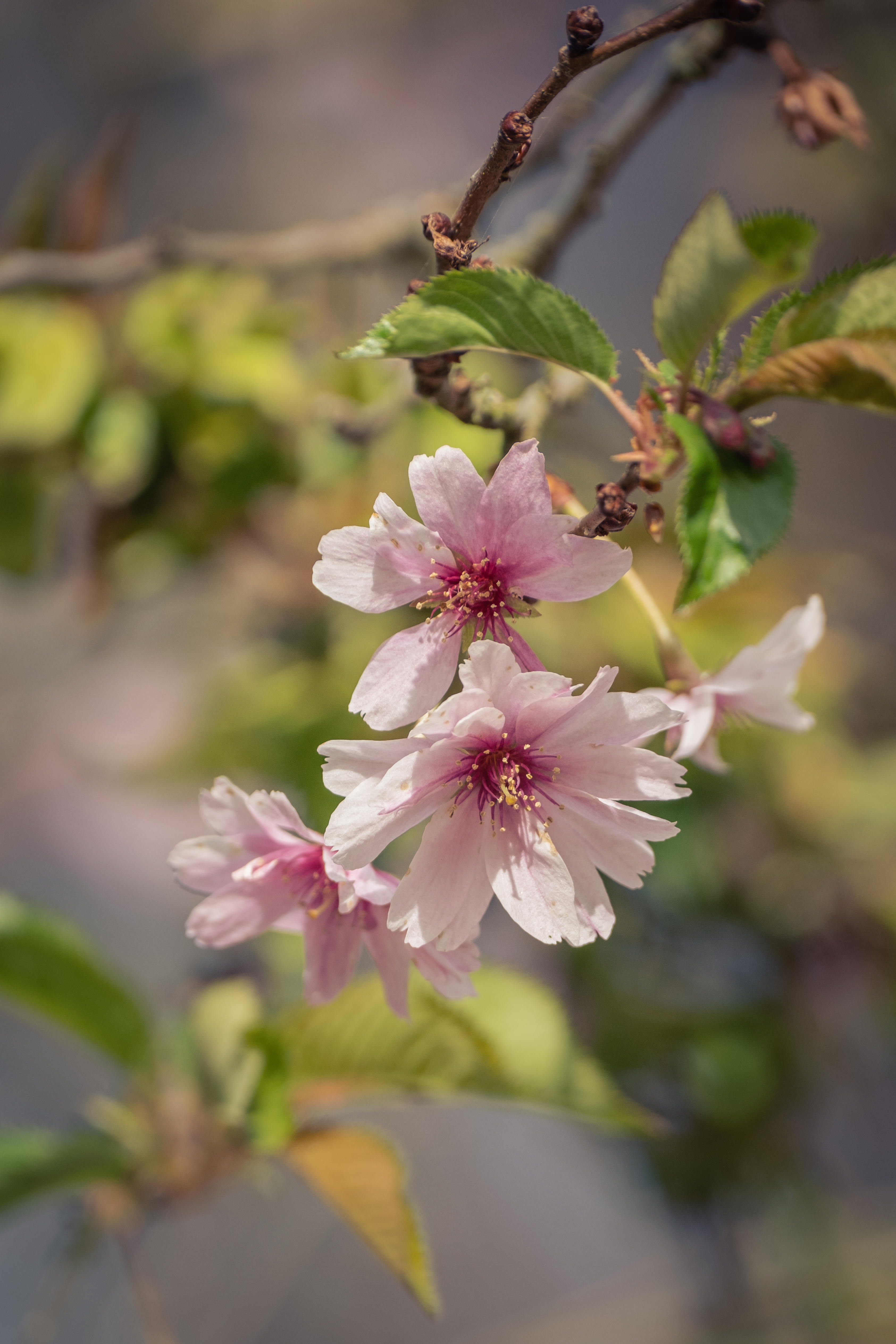
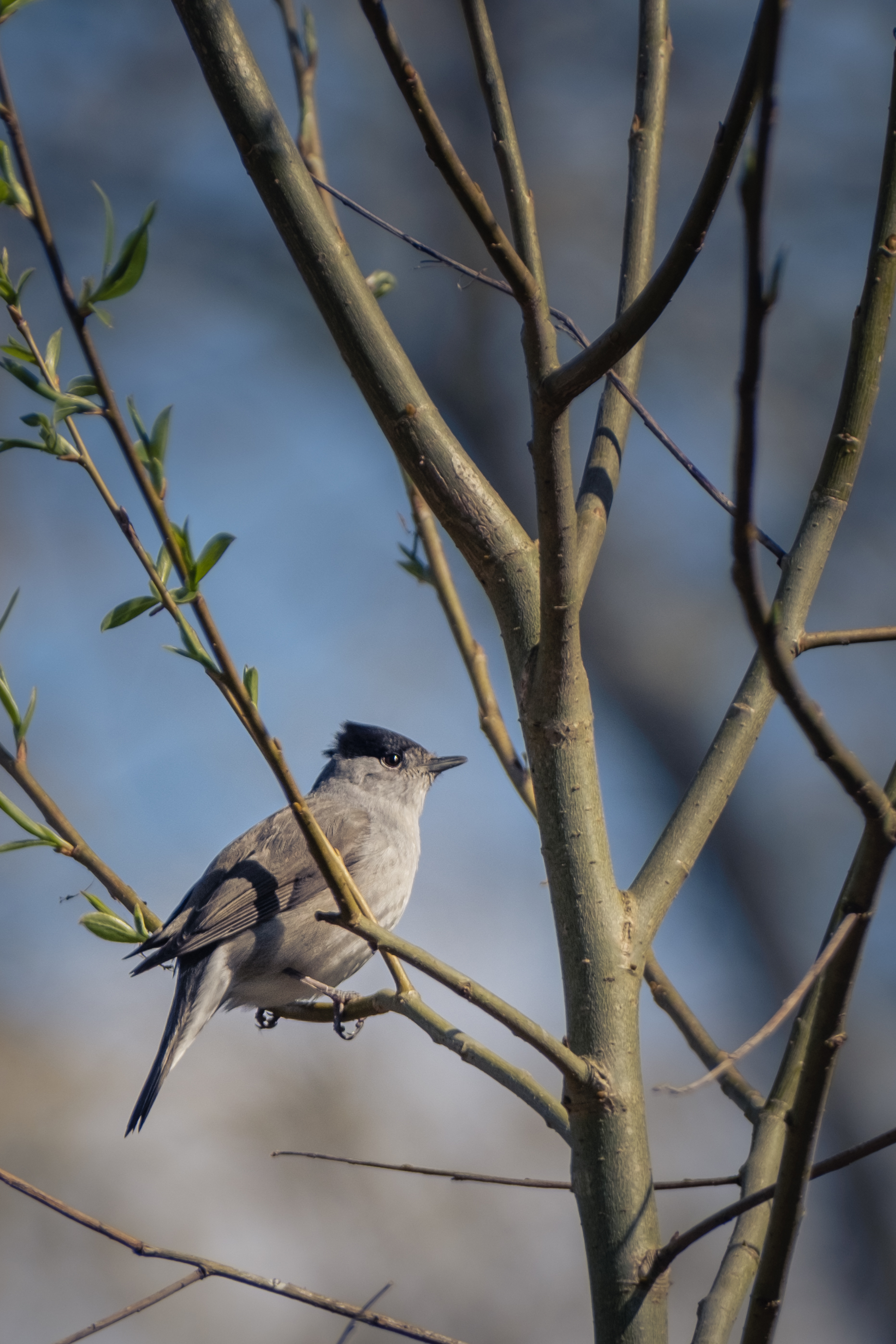
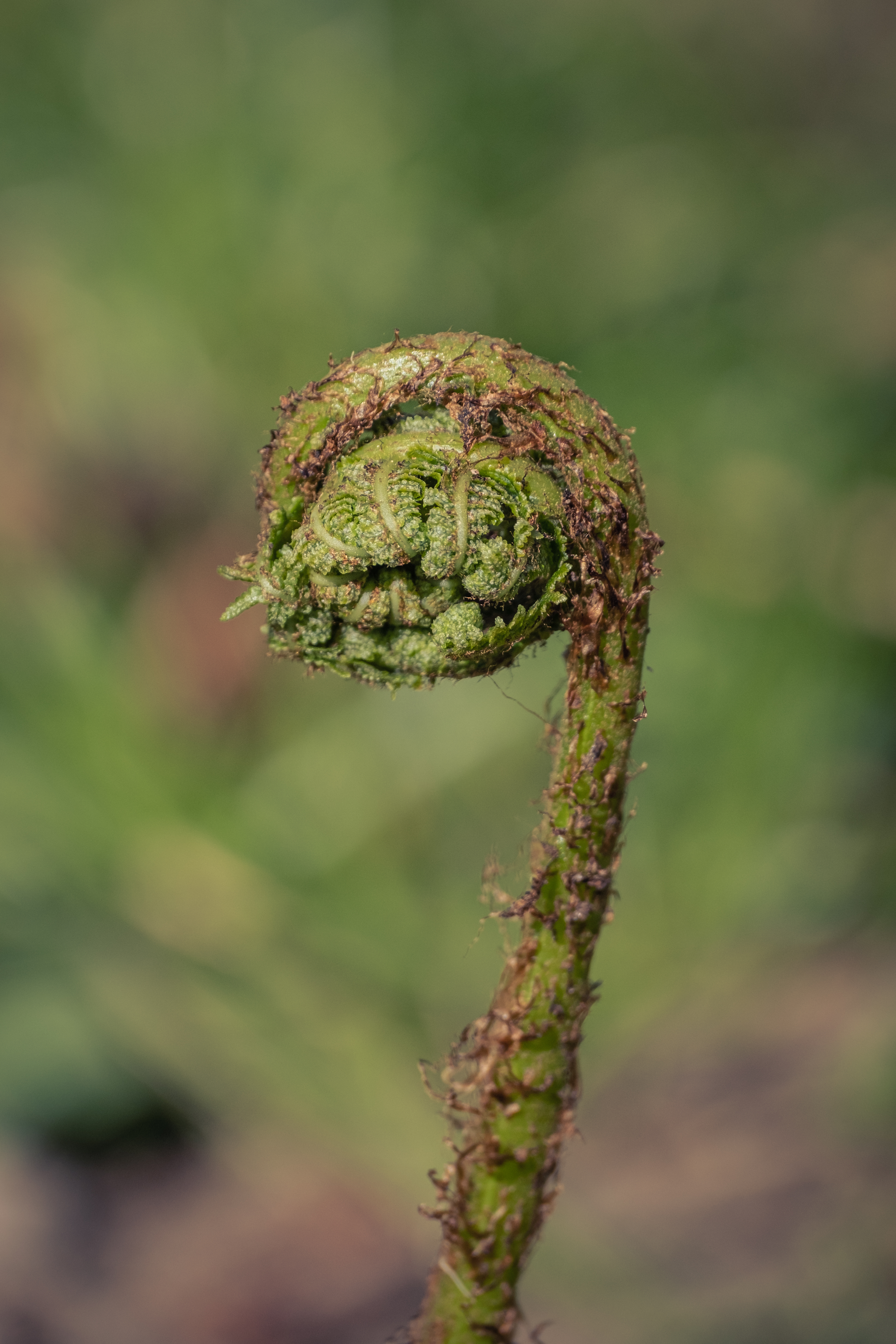
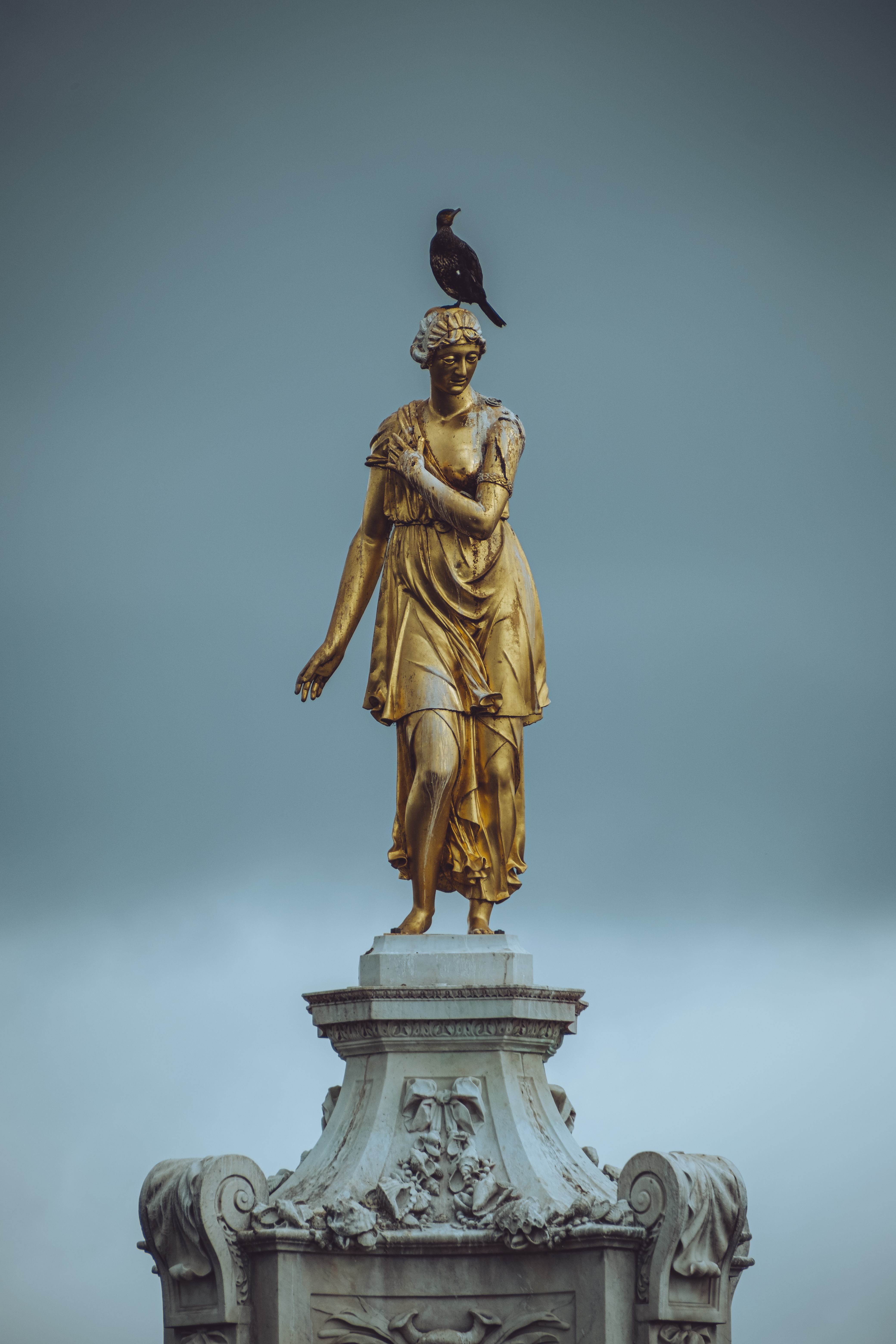
It’s mainly been nature photography. I got a new camera back in October, which I blogged a little about here, and in March, I bought myself a new zoom lens for it. I’d grown increasingly frustrated by seeing animals and birds, but not being able to get a half decent photograph of them, so a zoom seemed a necessary addition. I went for the Fuji 70-300mm zoom, rather than the 100-400mm version, mainly because of the difference of almost £1k in price. I’ve been incredibly happy with it so far. What I didn’t really expect was that it would really change how I experienced the outdoors. Previously, if I was out for a walk I wouldn’t give a huge amount of attention to those things I couldn’t photograph – little birds skulking in bushes, or distant buzzards and kites circling. The new lens brought all those things close enough for me to identify and to get some decent photos, which made me massively more interested in them. Since getting the new lens in March, I’ve counted seeing 68 species of bird, and 13 of those were brand new to me. Even though I was walking in the same places mostly, and at the same times of day, I was noticing much, much more.
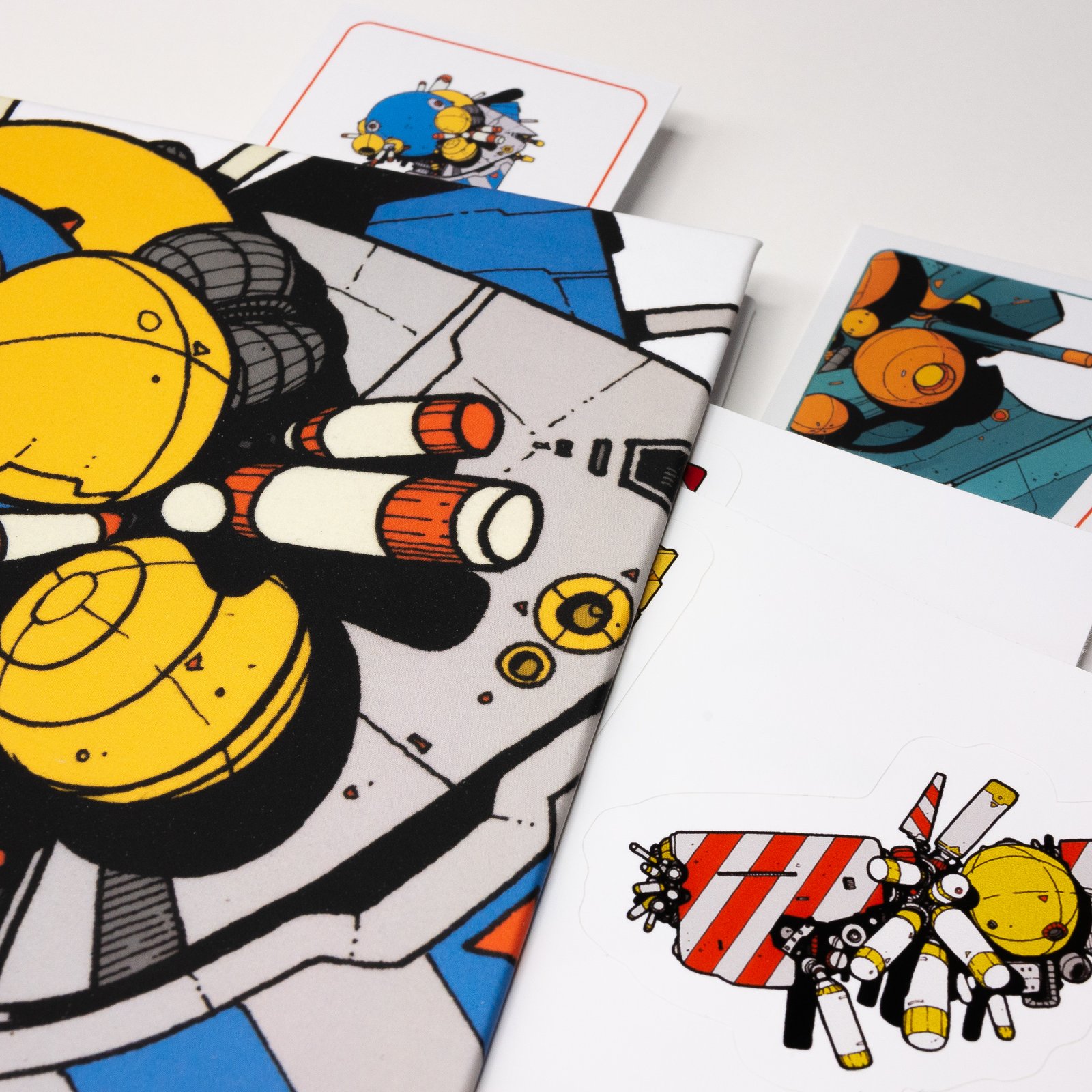
Besides taking photographs, I have managed to find time to get a few new products up on my online shop. If you enjoyed the Weird Field World book there are some matching stickers and prints available.
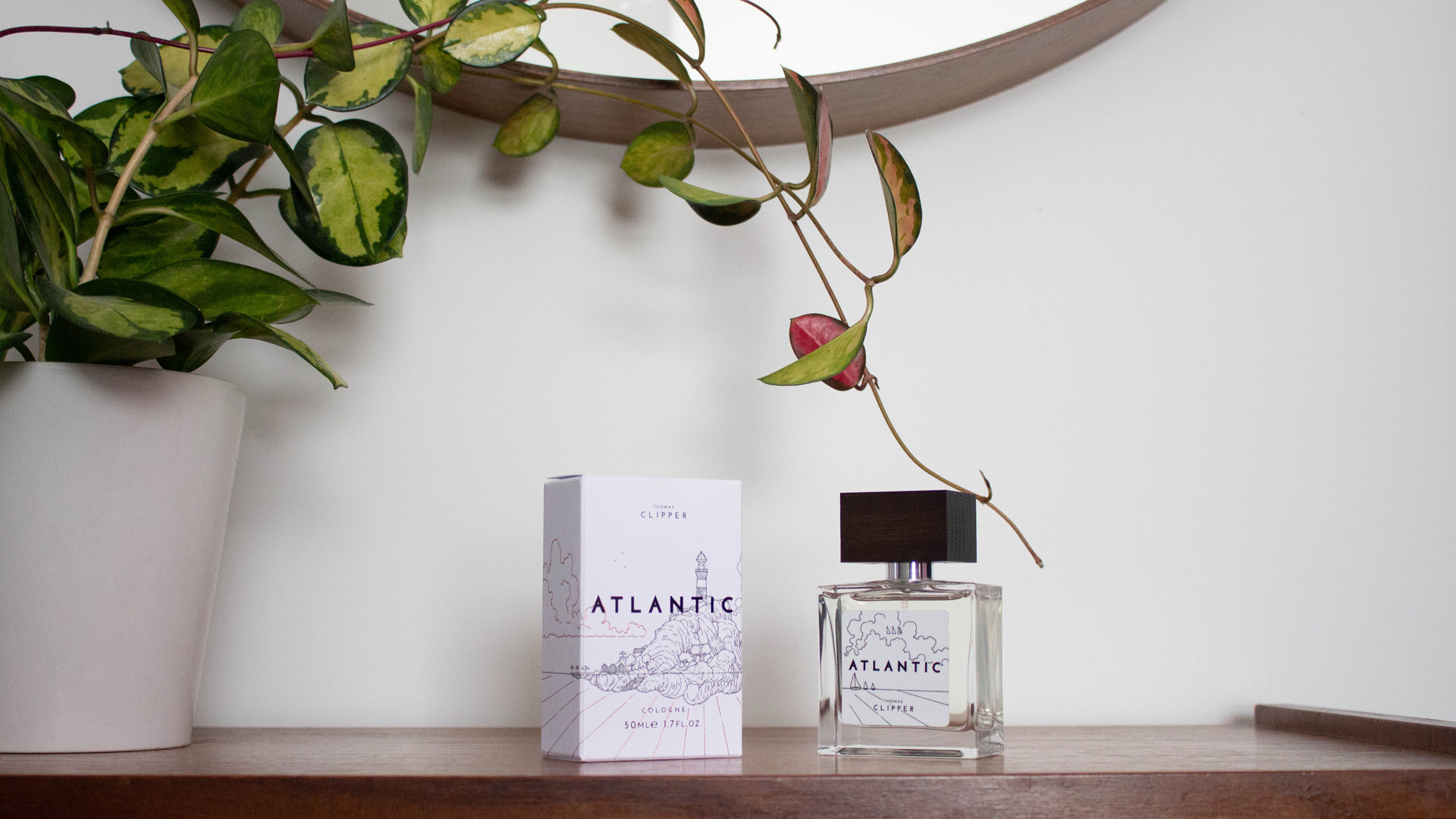
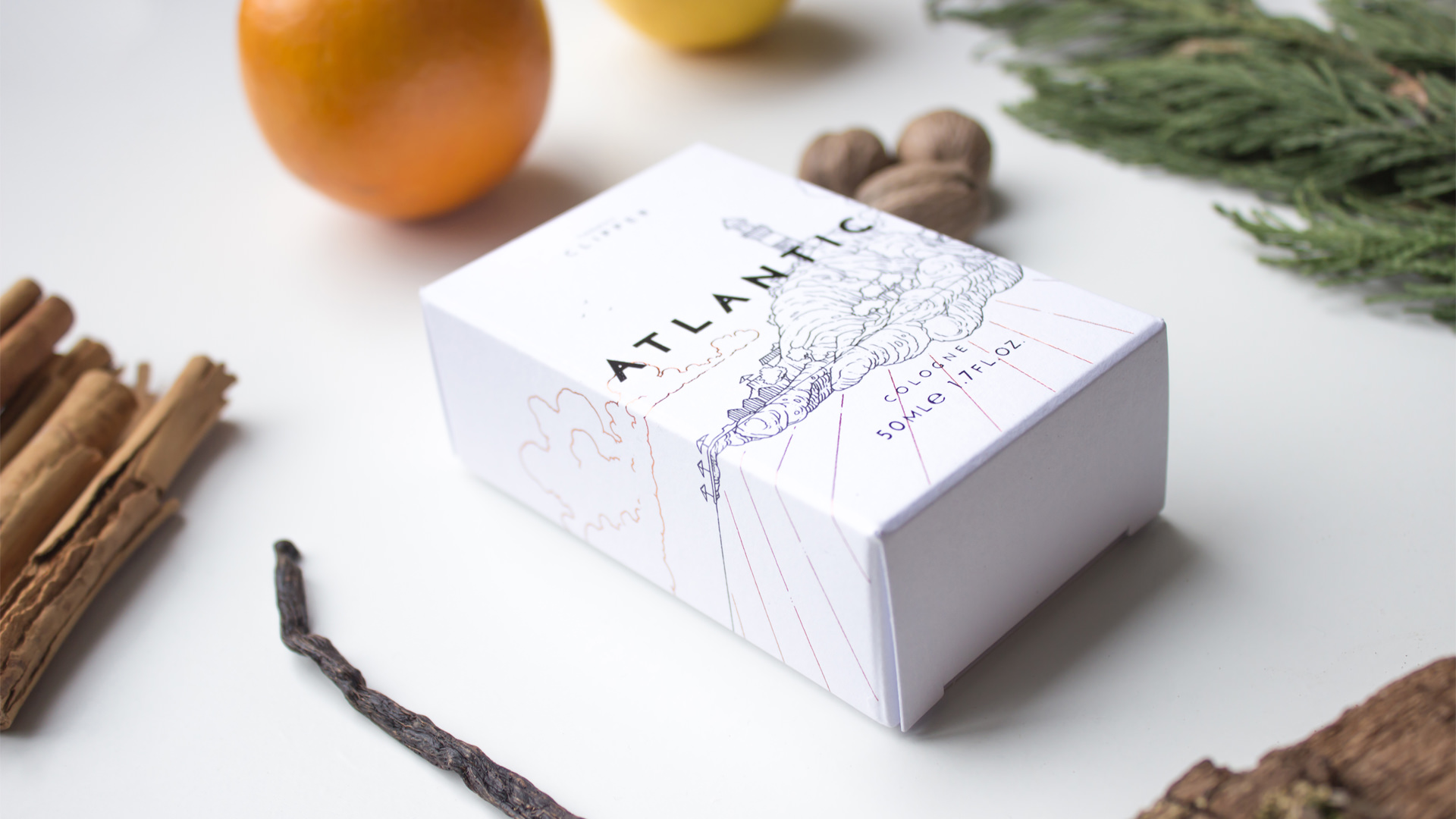
In March and April I worked with the UK fragrance company Thomas Clipper, on the packaging for their new men’s scent – Atlantic. This was a really enjoyable project to be part of. Here are a few images from the final packaging.
I’m going to make an effort to blog more regularly for the rest of the year. As always, if there’s something you’d like me to write about – let me know in the comments.
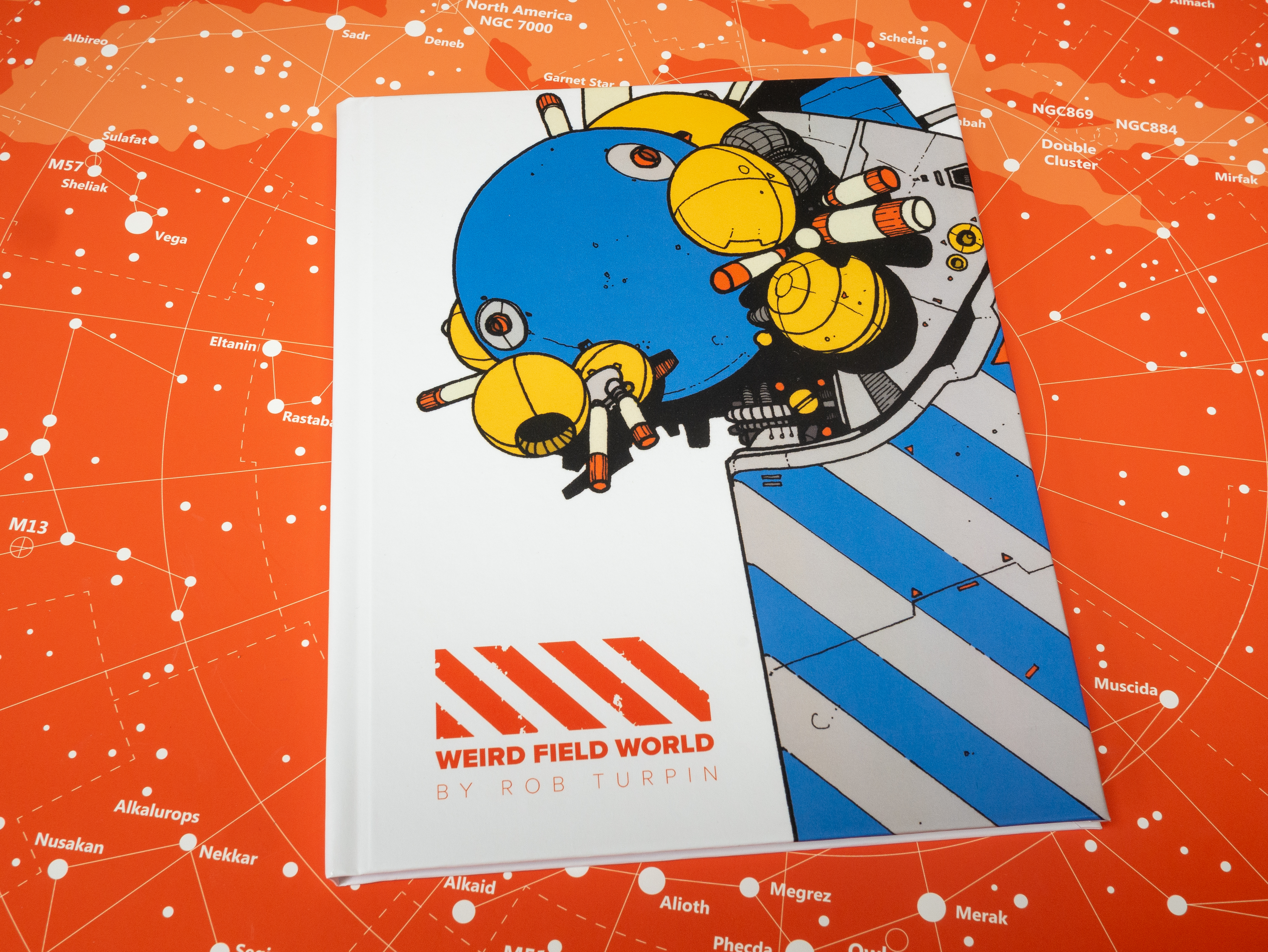
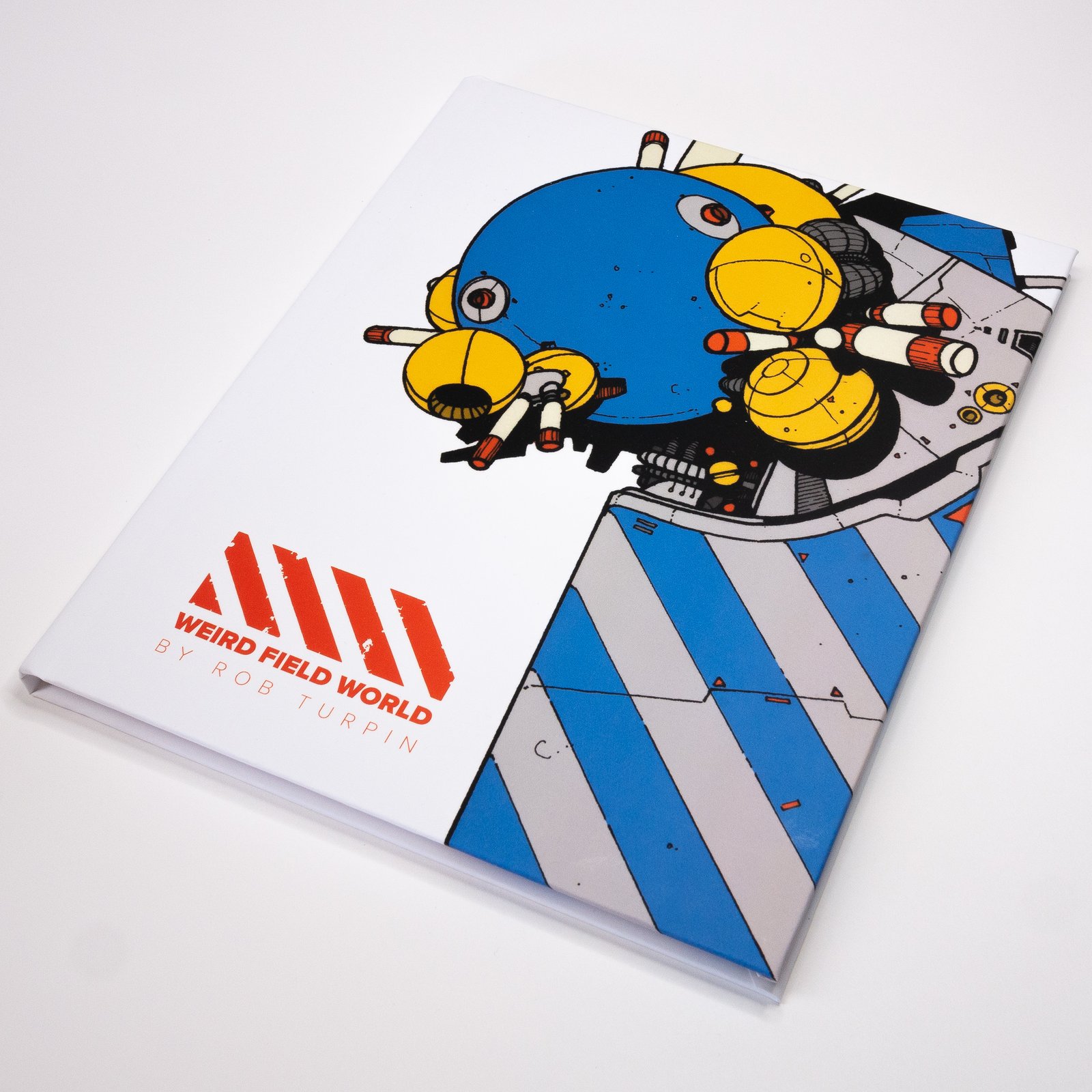
My first book, Weird Field World, is now available to buy here. If you’re a regular reader of the blog you’ll know that I ran a successful Kickstarter campaign to fund the book, and now all of the backers’ rewards have been mailed, the book is available to the general public.
The Weird Field World is a project I’ve been working on for around three years. It started off as a couple of little doodles on scrap paper, as I wondered what a spaceship might look like if it had an entirely novel form of propulsion. I figured it might look a little weird, and that name kind of stuck.
I built the project and produced content for it over on Patreon. The income from my supporters there allowing me some time to develop ideas, to write, and to draw lots of spaceships. What I’ve ended up with is a book full of spaceship illustrations, character drawings, written fiction, maps, diagrams, and a lot of world-building. I’m very proud of it, and the feedback so far has been fantastic.
If you’d like a copy, click here to buy one from my shop.




















































 this northern boy